Tanah Lot: Bali’s Sea Temple at Sunset (and Why You Should Go at Sunrise)
Half a day at Bali’s most-photographed temple — when to go, what to expect, and the offshore island the photos never quite explain.
📍 Tanah Lot, Tabanan, Bali, Indonesia
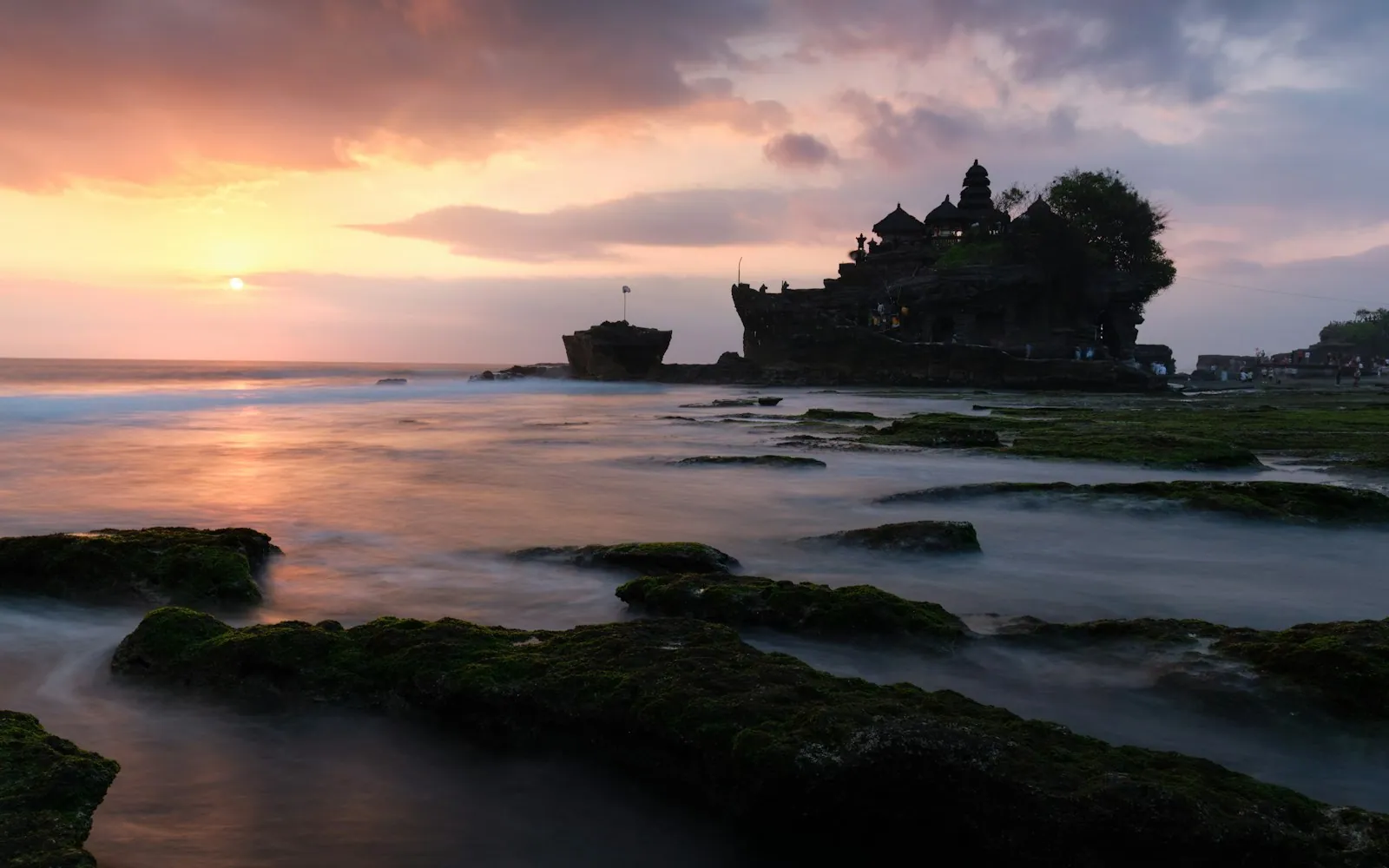
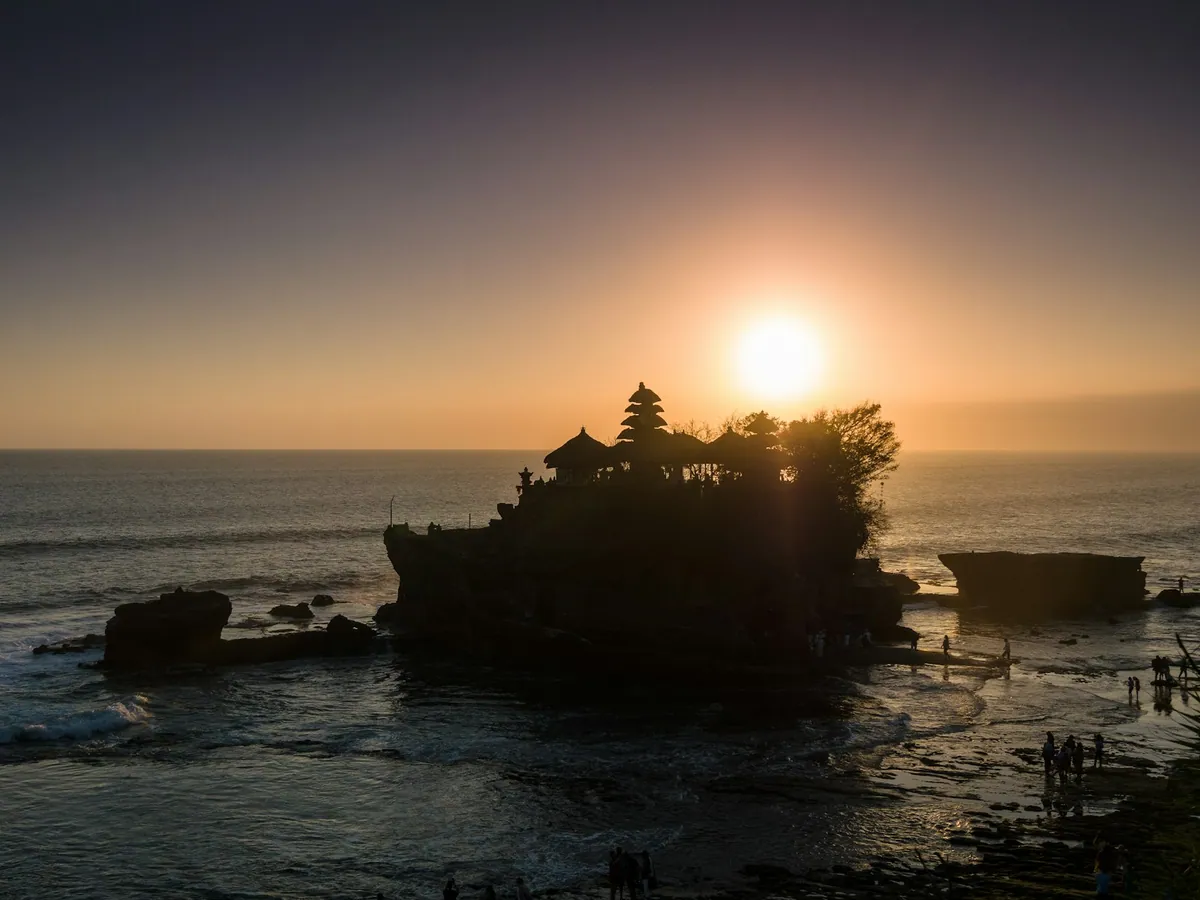
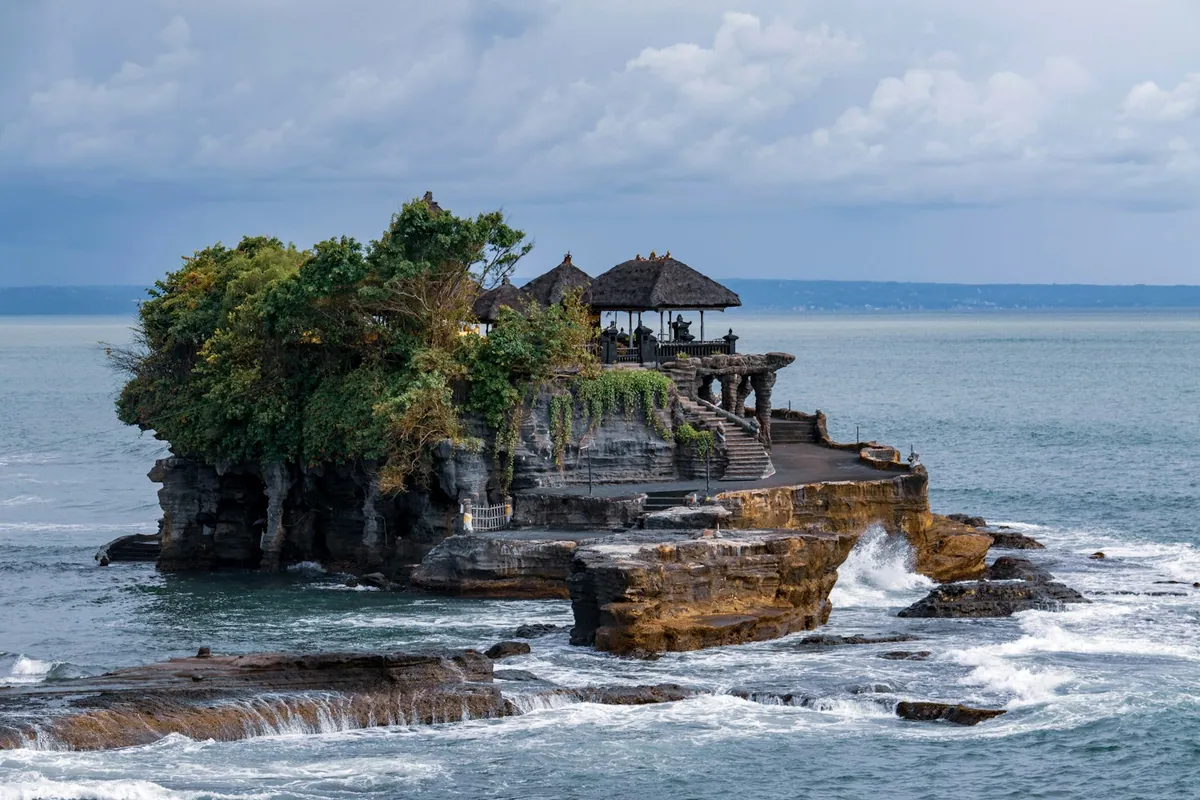
Tanah Lot is one of the seven great sea temples that ring the coast of Bali, sitting on a small rock outcrop just off the south-west shore in the Tabanan regency. The temple is small. The setting is enormous. At low tide, you can wade across the wet rocks to the base of the island. At high tide, the whole rock is surrounded by water, and the temple appears to float. At sunset, on a clear evening, with the sun dropping behind the silhouette of the temple and the offshore swell crashing against the base of the rock, it is one of the great photographs of South-East Asia. It is also, on most evenings, one of the great traffic jams.
Half a day is enough — if you plan it right. The trick, almost no one tells you, is to do it at sunrise instead.
The setup
Tanah Lot is about 45 minutes north-west of Canggu by car (longer with traffic), or roughly an hour from Seminyak, or 90 minutes from Ubud. There’s no public transport that gets you there reliably; either hire a driver for half a day (around $25–40), or scooter it if you’re comfortable on Balinese roads.
Entrance fee is small (about 75,000 IDR, around $5). The visitor area is a sprawl of stalls, restaurants, parking lots, and a long walkway down to the rocks. Take fifteen minutes to wander through it before you get to the temple itself.
The sunset crowd
The standard tourist programme is to arrive at Tanah Lot around 5 p.m., wander the shops, find a spot at the cliff lookout above the temple, and watch the sunset over the Indian Ocean with five thousand other visitors. The cafes along the cliff above the temple are packed by 5:30. The lookout terraces are shoulder-to-shoulder by 5:45. The sun sets behind the temple between 6:15 and 6:45 depending on the season. Then everyone tries to leave at the same time, and the parking lot becomes a slow-moving river.
The view is genuinely spectacular. The crowd is a tradeoff. If you are coming to Tanah Lot and your only window is sunset, here’s how to make it less painful: arrive by 4 p.m. (eat a late lunch on the cliff), claim a spot on the upper rocks behind the temple early, stay until full dark (most of the crowd leaves the moment the sun touches the horizon — the colours are best ten minutes after that), and accept that the drive home will be slow. Sunday and full-moon evenings are the worst for crowds.
The sunrise alternative
Almost no one comes to Tanah Lot at sunrise. The site officially opens around 7 a.m. (occasionally a little earlier — check the day before), and if you arrive at 6:45 the parking lot will have maybe a dozen cars in it, the tide is normally lower, and the temple is silhouetted against a pale eastern sky. You can wade across to the base of the island, sit on the wet rocks, take photographs, and listen to the ocean for the better part of an hour with maybe twenty other people in earshot.
You don’t get the famous sunset photograph. You get something better — the temple in the cool morning light, the surf against the rock, the local pemangku (priest) doing his morning chores at the small shrine on the visitor side, and the chance to actually feel the spiritual weight of the place rather than the Instagram weight.
I went at both. Sunrise was the magic hour. Sunset was the spectacle. If you can only do one, do sunrise.
Walking out to the rock
At low tide, you can walk through the shallows to the base of the temple island. You can’t enter the temple itself — it’s reserved for worshippers — but you can stand at the base, walk around the outcrop, and visit the cave on the western side where a holy spring flows. A small donation buys you a sprinkle of holy water from one of the priests, and the spring water (apparently fresh, in the middle of saltwater rocks — geological accident or divine signal, depending on your view) is supposed to bring blessings. Take the water; it’s a small, lovely tradition.
In the cave next door is a small white-and-yellow sea snake, which is venerated as a guardian of the temple. The snake is often visible during the day, coiled in a small alcove. Different priests show it to visitors for a small donation. Whether you find this charming or strange will depend on your relationship to snakes; the snake itself appeared completely unbothered by either reaction.
What to combine it with
Tanah Lot is a half-day. The half-day pairs well with one of these:
Pura Batu Bolong, the smaller temple just north of Tanah Lot on its own little rock arch, is a five-minute walk along the coast. It’s rarely crowded. If you’ve come for the photographs, this is a quieter cousin worth the walk.
The west-coast beaches (Yeh Gangga, Tibu Beach) further north are quieter than Canggu and undeveloped. A late afternoon swim followed by a sunset at Tanah Lot is a classic plan.
Or, if you’re coming from Ubud, combine the morning trip with Pura Taman Ayun (the royal water-temple at Mengwi, on the road back) and a coffee stop at one of the cafes in Mengwi village.
How nice are the temple staff?
Excellent. The pemangku I gave my donation to was a slight, weather-beaten man maybe in his sixties who blessed me by sprinkling water on my head three times, dabbing rice on my forehead, and tucking a single frangipani flower behind my ear. He spoke no English. We communicated entirely through gesture. At the end he pressed his hands together and bowed slightly. I bowed back. He smiled. The whole interaction took maybe ninety seconds and it was, somehow, one of the more memorable moments of the morning.
The visitor centre staff and the food stall vendors are all the standard, baseline-warm Balinese hospitality. If you want a coffee or a coconut while you wait for your driver, any of the dozens of small warungs in the visitor area will look after you.
A note on the photographs
The two iconic Tanah Lot photographs — the long-exposure silhouette of the temple at sunset, and the close-in shot of the surf detonating against the rocks — are made by photographers who arrive an hour before sunset, stake out a spot on the upper cliff, and stay until well after the sun is down. If you want the long-exposure shot, bring a tripod and a polariser, and aim for the moment about ten minutes after the sun touches the horizon when the sky goes deep mauve and the temple silhouette sharpens against it. The cliff above the temple has several wooden viewing decks that are made for this shot. The trick is patience: the colour is best after the bulk of the crowd has left.
If you don’t care about the postcard photograph, you’ll find Tanah Lot more rewarding at the quieter end of the day. The grounds remain open until well past dark in most months, and the temple after sunset — lit faintly by the small lamps that the priests light at dusk, with only a handful of late visitors and the steady sound of the surf — is its own kind of experience. The Indian Ocean here is loud. The temple, somehow, makes the sound feel like part of the architecture.
If you go
• Sunrise > sunset, if you can manage the early start. • Wear a sarong (loaned at the entrance). • Bring small notes for the donations and the holy water blessing. • Be respectful of the working temple — it’s active, not a museum. • Don’t fly drones. They’re prohibited inside the temple grounds.
Tanah Lot is the bit of Bali that knew, before any of us did, that it would end up on a million postcards. The temple is real. The sea snakes are real. The sunset is genuine. Come early, come quiet, and you’ll see why this rock has been holy to the Balinese for five hundred years.