Sanur, Bali: The Quiet East Coast and the Best Sunrise Beach on the Island
Three days in Bali’s family-friendly resort town — sunrise on the calm beach, the boardwalk, and the slow rhythm Sanur has kept while the rest of the south got loud.
📍 Sanur, Denpasar, Bali, Indonesia
Sanur sits on Bali’s south-east coast and is, by quiet consensus, the most underrated resort area on the island. Where Seminyak gets the cool kids and Canggu gets the surfers and Nusa Dua gets the five-star resorts behind their walls, Sanur gets families, retirees, return visitors, and people who tried Bali fifteen years ago and have now circled back wanting calm. The east coast faces the sunrise. The waves are tiny because the beach is protected by an offshore reef. The water is warm and shallow. The boardwalk that runs along the back of the beach for five kilometres is one of the best urban beach walks in Asia. It is the slow, uncomplicated Bali, and a lot of people find it boring on the first day and unable to leave by the third.
I had three days. I came reluctantly (I had heard the “old people’s Bali” jibe). I left wanting to stay another four.
The setup
Sanur is a 30-minute drive from Denpasar airport — the closest of all the major resort towns. Most accommodation is along Jalan Danau Tamblingan, the spine of the village, with the beach a short walk to the east. The walk from the south end (Mertasari Beach) to the northern end (the harbour) along the boardwalk is about an hour at a slow pace.
Stay at one of the small family hotels along the boardwalk if you can. The historic Tandjung Sari and the smaller Hotel Segara Village are both excellent. Many of them are owned by the families that built them in the 1960s and have a polish that you don’t get from the chain hotels.
Day one: sunrise, breakfast, slow
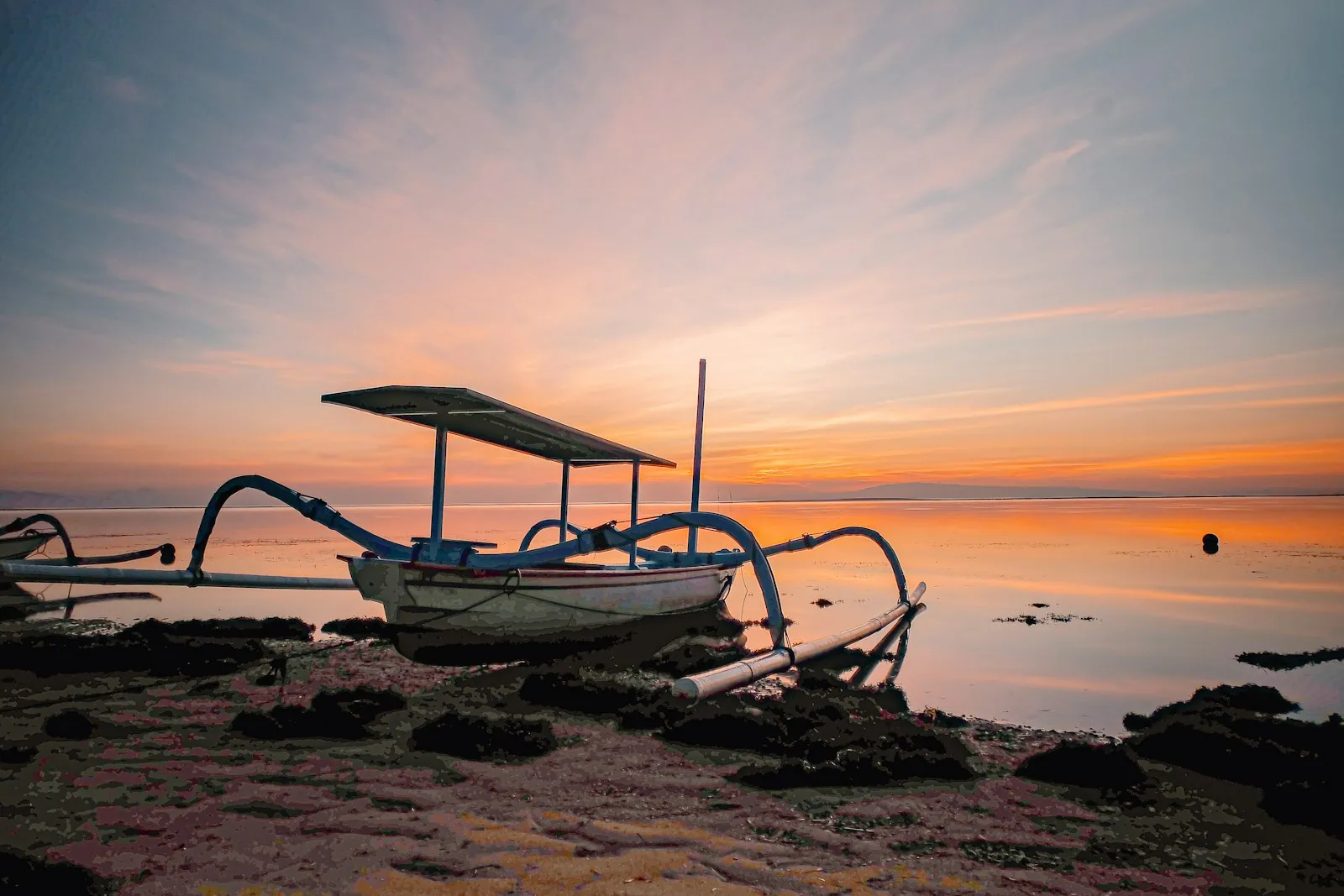
Set an alarm for 5:30 a.m. on day one. Walk down to the beach. The sky in the east will be just starting to lighten, the boardwalk will be quiet except for a few joggers and an early surfer dragging a board across the sand, and the eastern horizon will be filling with the orange-grey-peach colours that east-facing beaches get and west-facing beaches don’t. Find a bench on the boardwalk near the Tandjung Sari hotel. Sit. The sun comes up at around 6:00–6:30 depending on the season. The traditional jukung outrigger fishing boats are pulled up on the sand, the volcano of Mount Agung will sometimes be visible in the haze to the north-east, and you’ll be one of maybe twenty people on the entire stretch of beach watching the day begin.
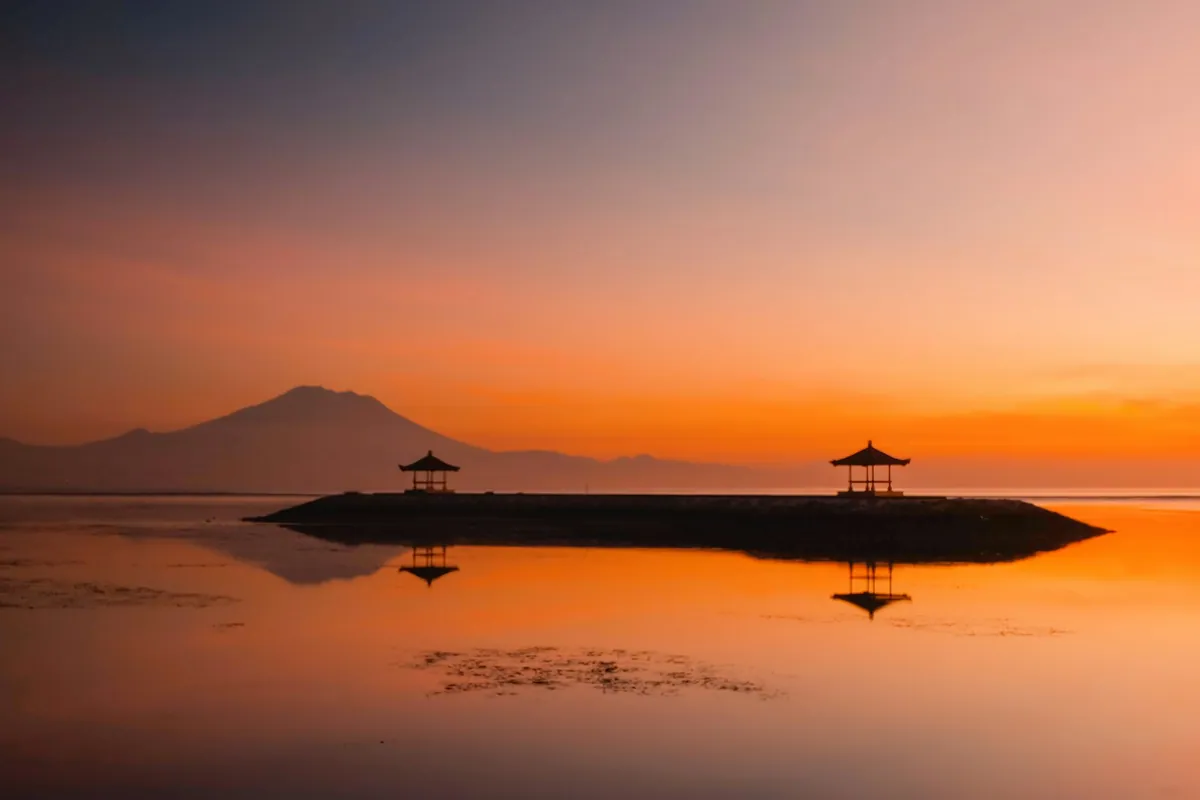
After sunrise, walk to one of the boardwalk cafes for breakfast. Massimo Italian Restaurant does an excellent espresso. Bonsai Cafe (the one in the middle of a bonsai garden, you can’t miss it) does a leisurely Western breakfast. Many hotels include breakfast on a deck overlooking the beach — if yours does, take it.
Spend the rest of the morning swimming. Sanur’s water is genuinely the calmest on the south coast — the offshore reef breaks the swell about a kilometre out, leaving a flat lagoon between you and the reef that’s safe for kids, weak swimmers, and tired adults. There are several spots where you can hire kayaks, paddleboards, or banana boats, but mostly you’ll just float.
Day two: the boardwalk and the markets
The Sanur boardwalk runs the entire length of the beach — about five kilometres — and is the perfect anchor for a slow day. Walk it end-to-end at any pace you like. Stop for a coconut. Stop for a foot massage at one of the open-air spas (about $5 for thirty minutes). Stop at the Sindhu Beach Market in the morning for fresh fruit, satay, and the kind of bustle that the rest of Sanur generally avoids.
Lunch at one of the warungs along Jalan Danau Tamblingan. Warung Mak Beng, near the northern end of the village, is the famous one — they serve exactly one dish (fried fish with rice, coconut soup, and sambal) and the queue is constant for a reason. Cost: about $4. Eat it. The warung has been doing the same dish since 1941.
In the afternoon, browse the small art galleries scattered along the village’s side streets. Sanur was the original hippie/expat-artist colony of Bali in the 1930s — the Belgian painter Adrien-Jean Le Mayeur and the Indonesian artist Spies both lived here — and there are several good little galleries that show local Balinese work. The Le Mayeur Museum, his preserved beach house and studio, is at the northern end of the boardwalk and worth twenty minutes.
End the day with a long sundowner — the boardwalk faces east, so sunsets aren’t the show that Seminyak’s are, but the sky behind the village goes pink as the sun drops behind the western mountains, and the boardwalk benches are excellent.
Day three: a Nusa Lembongan day trip
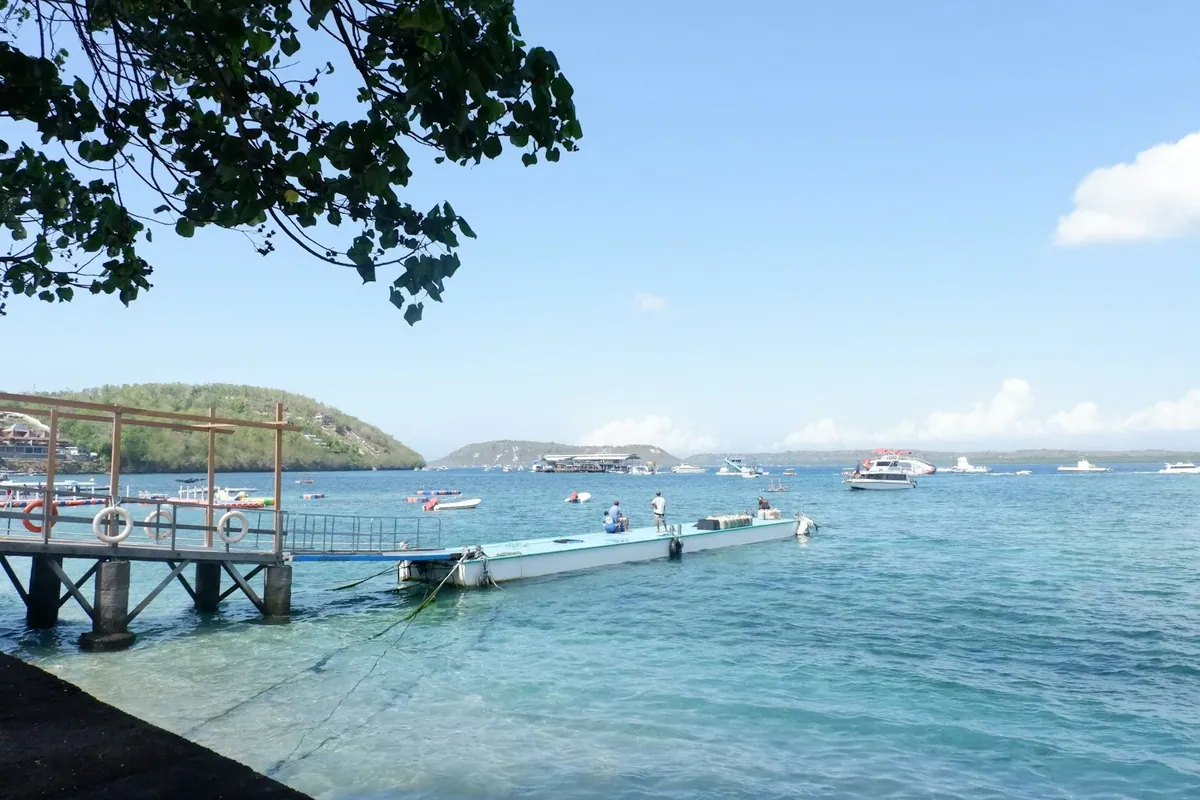
Sanur is the launching point for the Nusa islands — Lembongan, Penida, Ceningan — and the public-fast-boat pier is at the northern end of the village. If you have a third day in Sanur, spend it doing a full-day trip to Nusa Lembongan. Boats leave from 8 a.m., the crossing is 30 minutes, and you can be back in Sanur by 5 p.m. with time for dinner.
A Lembongan day gives you a beach (Mushroom Bay or Dream Beach), a snorkel (book through any of the boat operators on Lembongan’s main strip), and a slower pace than the Penida day trips. If you’d rather just stay in Sanur, that’s also valid — another sunrise, another boardwalk walk, another slow lunch. Sanur is a place that rewards doing nothing.
How nice are people in Sanur?
Old-school nice. Sanur’s tourism economy is one of the longest-established on the island, and the families that run the hotels, restaurants and warungs have been doing this for two and three generations. The result is a polish to the hospitality that you don’t find everywhere — staff who remember your name on day two, owners who come over to your table at the end of dinner to ask if everything was alright, retirement-age expats who say good morning to you on the boardwalk because they’ve seen you walk past three days in a row.
I had: a hotel manager bring me a thermometer and a bowl of bubur (rice porridge) when I had a stomach bug on day two; a Warung Mak Beng waiter cut me ahead of the queue when he noticed I was alone; and a beach masseuse decline to charge me extra for an extended session “because you needed it, no problem.” Sanur is the village version of the Balinese hospitality everyone talks about. Genuinely lovely.
If you go
• Sunrise. Always sunrise. Set the alarm. • Walk the boardwalk end-to-end at least once. • Eat at Warung Mak Beng. Once is enough; once is necessary. • Use the boats from Sanur for any Nusa-island day trips. • Don’t stress about night life. Sanur quiets down by 9:30 p.m. That is the point.
Sanur is the bit of Bali that has not changed pace. The boardwalk, the lagoon, the sunrise, the boats, the warungs, the slow late breakfasts — it is exactly what it was twenty years ago, and almost exactly what it was forty. If you’re in your twenties and Bali’s about beach clubs, Sanur isn’t for you. If you’re anywhere else in life, give it three days. You will leave wishing for one more.