Madrid in Three Days: Plaza Mayor, the Prado and a Long Lunch in La Latina
Three days in Spain’s capital — the great squares, three of the world’s best art museums, and the slow tapas crawl of a Sunday.
📍 Madrid, Spain
Madrid does not sell itself the way Barcelona does. There is no Sagrada Família. There is no postcard skyline. The famous landmarks are confined to a few squares and a single museum mile, and the rest of the city is pleasant rather than dramatic — broad 19th-century boulevards, leafy plazas, neighbourhoods of three- and four-storey apartment buildings with iron balconies. And then you spend three days in Madrid and you slowly understand: the city isn’t about the landmarks. It’s about the rhythm. The long lunches. The 10 p.m. dinners. The Sunday vermouth. The crowded bars where everyone leaves their crumpled napkins on the floor. The Prado, which is one of the three or four greatest art museums on the planet. The friends you’ve been Madridless until now, and they’re glad you’ve come.
Three days will give you the soul of the place. You can squeeze it into two if you must.
The setup
Fly into Madrid-Barajas (20 minutes by metro to the centre, line 8). Stay near Sol, La Latina, or Malasaña for central walking access. Mid-range hotels run €100–200 a night.
The metro is excellent. Walk where you can. Don’t rent a car — the city does not need it and parking is impossible.
Day one: Plaza Mayor, La Latina, the lunch culture
Walk into the centre and start at Puerta del Sol — the heart of Madrid, the geographical centre of Spain (a small plaque at Kilometre Zero marks the point from which all Spanish road distances are measured). Then walk west to Plaza Mayor.
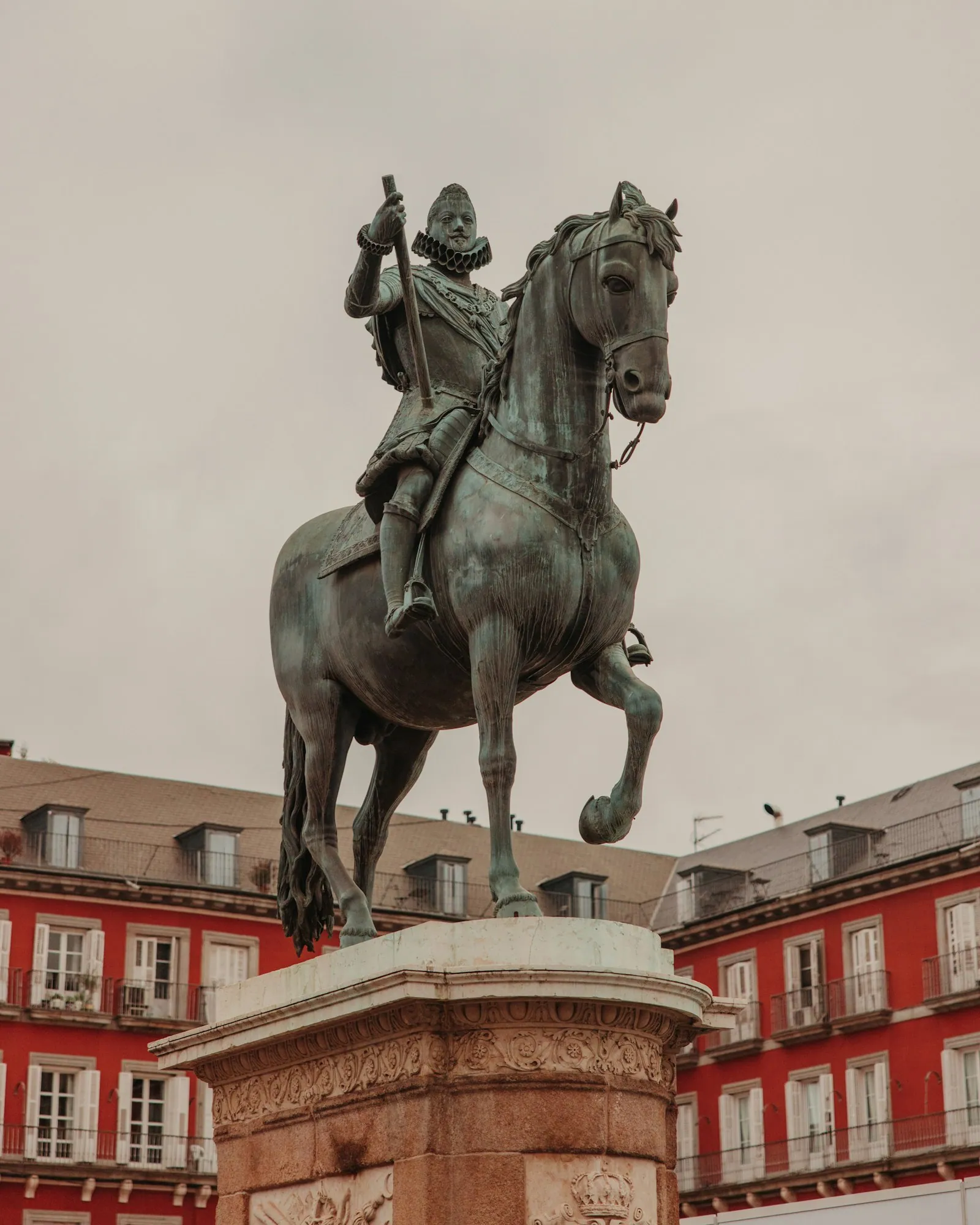
Plaza Mayor is the great enclosed square of Madrid, built in 1620 for Philip III (whose equestrian statue stands in the centre), used over the centuries for bullfights, royal coronations, and Inquisition burnings, and now used mostly for terrace dinners and the occasional cultural festival. It’s a perfect rectangle, 129 by 94 metres, ringed by uniform red buildings with iron balconies and nine arched entryways. Sit at one of the cafes for a coffee. The cafes on the square are touristy and overpriced; the ones a block off are better.
Walk south into La Latina — the old neighbourhood between the Plaza Mayor and the river. La Latina is the spiritual heart of Madrid’s tapas culture. The famous street is Cava Baja — a 200-metre stretch of about 30 small bars and restaurants, packed every weekend evening. The Sunday tradition is the El Rastro flea market in the morning (the great street market of Madrid, running every Sunday morning since the 16th century along Ribera de Curtidores) followed by a vermouth at one of the bars on the surrounding streets. Adopt the rhythm.
Eat lunch in La Latina. The tapas pattern is to order a few things at one bar (a glass of wine, a plate of jamón, a portion of croquetas, a slice of tortilla) and move to the next bar after fifteen minutes. Reliable La Latina spots: Casa Lucio (the famous huevos rotos), Casa Lucas, Lamiak, El Tempranillo, La Antoñita.
Day two: the Prado and the Reina Sofía
Day two is the museum day. Madrid has three world-class art museums in a triangle around the same metro station (Atocha): the Prado (the great old-master collection), the Reina Sofía (modern art, including Picasso’s Guernica), and the Thyssen-Bornemisza (an enormous private collection bridging the gap between the other two).
The Prado is the headline. Founded in 1819, it has the world’s greatest collection of Spanish painting — Velázquez, Goya, El Greco, Murillo — plus extraordinary holdings of Italian (Titian, Tintoretto, Raphael, Caravaggio), Flemish (Bosch, Van der Weyden, Rubens, Bruegel), and Northern European masters. Plan three to four hours. You cannot do it in less. Buy your ticket online to skip the queue.
Highlights: Velázquez’s Las Meninas (the painting that more than any other defines the museum’s identity); Goya’s Black Paintings (the dark, hallucinated late works moved here from his country house); Bosch’s Garden of Earthly Delights (the most famous triptych in Western art, with its hellish right-hand panel that has been read in different ways for 500 years); Rogier van der Weyden’s Descent from the Cross. Allow longer than you think.
In the afternoon, the Reina Sofía across the road. The headline is Picasso’s Guernica (1937, his anti-war response to the bombing of the Basque town during the Spanish Civil War, now displayed in a single dedicated room), but the museum’s collection of Spanish modernism — Dalí, Miró, Tàpies — is also extraordinary. Allow two hours.
For dinner, eat in the Huertas / Letras quarter just north of the museums. Casa González (a tiny old wine and ham bar), Casa Labra (the historic spot for fried cod fritters), or any of the small bars on Calle de las Huertas.
Day three: the Royal Palace, the Retiro, a slow afternoon
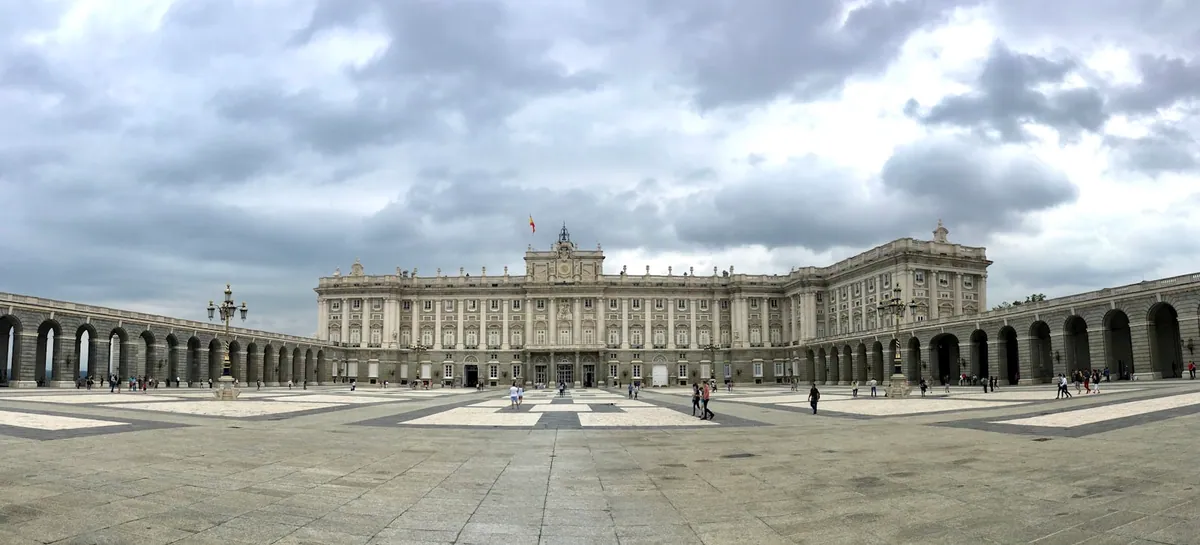
Walk to the Royal Palace of Madrid (Palacio Real) in the morning. The current royal family of Spain doesn’t live here (they live in a smaller palace on the outskirts), but the building remains the official residence and is used for state events. It’s the largest functioning royal palace in Western Europe — 3,418 rooms, about 1.3 million square feet, all in restrained Baroque-Classical style. Visit the State Apartments (about €14, audio guide €5). Allow two and a half hours including the gardens at Sabatini and Campo del Moro.
After the palace, walk down Gran Vía — Madrid’s grand 1910s Belle Époque commercial avenue, full of theatres, hotels, shops, and the spectacular Edificio Metropolis (the curved Beaux-Arts building with the winged figure on top).
Eat lunch in Malasaña — the old bohemian neighbourhood north of Gran Vía, slowly being gentrified, full of independent cafes and small restaurants. Pez Tortilla (their tortillas with caramelised onion are the city’s reference), Casa Macareno (a serious old jamón bar), or any of the small bistros around Plaza del Dos de Mayo.
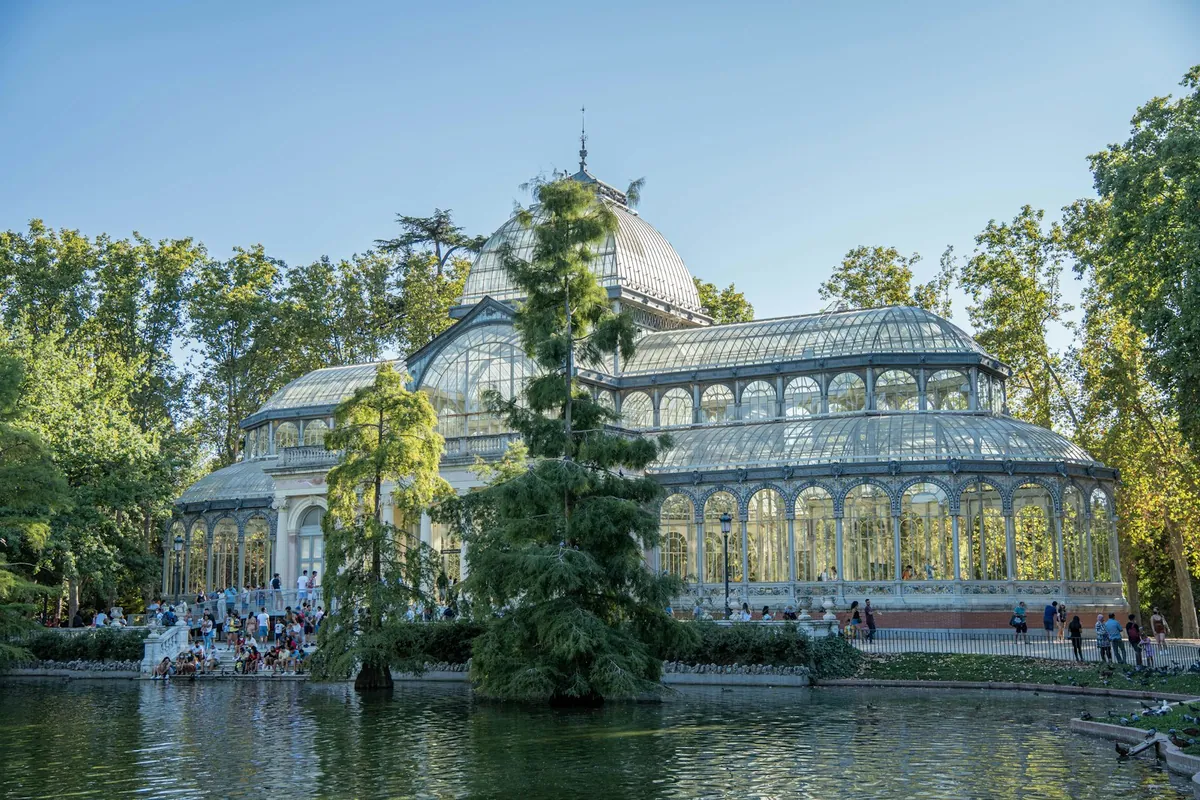
In the afternoon, walk the Retiro Park — Madrid’s great central green space, a 350-acre former royal garden that became a public park in the late 19th century. Walk the lakeside (rent a small boat for €6 if you want to row), walk to the Crystal Palace (Palacio de Cristal, a beautiful 1887 glass-and-iron pavilion, free to visit, hosts excellent rotating contemporary art exhibitions), walk the Rose Garden. End the day with a coffee at one of the kiosks.
For your final dinner, book a table at a serious Madrid tabernamodern (Sala de Despiece, Punto MX) or a classic taberna (Casa Botín — the oldest continuously-operating restaurant in the world, founded 1725, just off Plaza Mayor — you eat suckling pig by the fireplace).
How nice are Madrileños?
Loud-warm. Madrid is a Spanish-speaking-Spanish city (no separate language tradition like Catalan or Basque), the friendliness is direct, the bars are noisy, and strangers will engage with you about politics and football and food whether you ask them to or not. Within three days I had: a Plaza Mayor cafe owner refuse the tip because “you ordered well”; a Prado guard quietly walk me to a smaller room with two paintings he thought I’d missed; and a tapas bar regular at a place in La Latina insist on shouting the next round of vermouth to me “porque eres extranjero, hombre, bienvenido.” The Madrid friendliness is loud and unguarded. Take it.
If you go
• Eat on Spanish time. Lunch from 2 to 4. Dinner after 9. • Buy Prado, Reina Sofía and Thyssen tickets online to skip queues. • Take the metro. The walking is fine but the metro is fast and cheap. • Sunday is the day for El Rastro market and a long lunch crawl in La Latina. Don’t book big plans for Sunday morning. • Watch the Plaza Mayor cafes for tourist-priced bills. The bars one block off are a third of the price for similar food.
Madrid is the city that doesn’t need to convince you. You arrive, you fall into the rhythm, and by day three you’re eating at 10 p.m. and ordering a vermouth at 1 p.m. on a Sunday like a local. Three days is enough to start. Most people come back.