Lyon: Vieux Lyon, the Bouchons and a Hill of Roman Ruins
Three days in France’s capital of food — old town traboules, Roman amphitheatres, and dinner at a bouchon.
📍 Lyon, France
Lyon is the third-largest city in France, the unofficial capital of French gastronomy, and the place that French people from elsewhere will quietly tell you is their favourite mid-sized European city. It sits at the confluence of the Rhône and the Saône, with its old quarter (Vieux Lyon) on the right bank of the Saône at the foot of Fourvière hill, and its 19th-century Presqu’île district on the peninsula between the two rivers. It has been a major European city since Roman times — there is a fully visible Roman theatre on Fourvière hill, where the city was founded in 43 BC — and it has, since at least the time of Paul Bocuse, been the city the rest of France looks to for what serious eating ought to be.
Three days is enough to fall for it. Four if you want a day in the surrounding wine country.
The setup
Fly to Lyon Saint-Exupéry airport, or take the 2-hour TGV from Paris Gare de Lyon. Stay in the Presqu’île (the central peninsula) or in Vieux Lyon itself for atmosphere. Hotels run €120–200 a night.
The city is walkable but the metro and the funicular up Fourvière hill are useful. Get a Lyon City Card if you’re planning more than two museum visits — it bundles transport and museum entry.
Day one: Vieux Lyon and the funicular
Walk into Vieux Lyon — the largest Renaissance quarter in Europe outside Italy, a UNESCO World Heritage site, and a tight grid of pink, cream, and pale-yellow Renaissance facades around the Cathedral of Saint-Jean. The cathedral itself is a beautiful Gothic-Romanesque mix with an extraordinary 14th-century astronomical clock that performs at 12, 14, 15, and 16. The interior is dim and weighty.
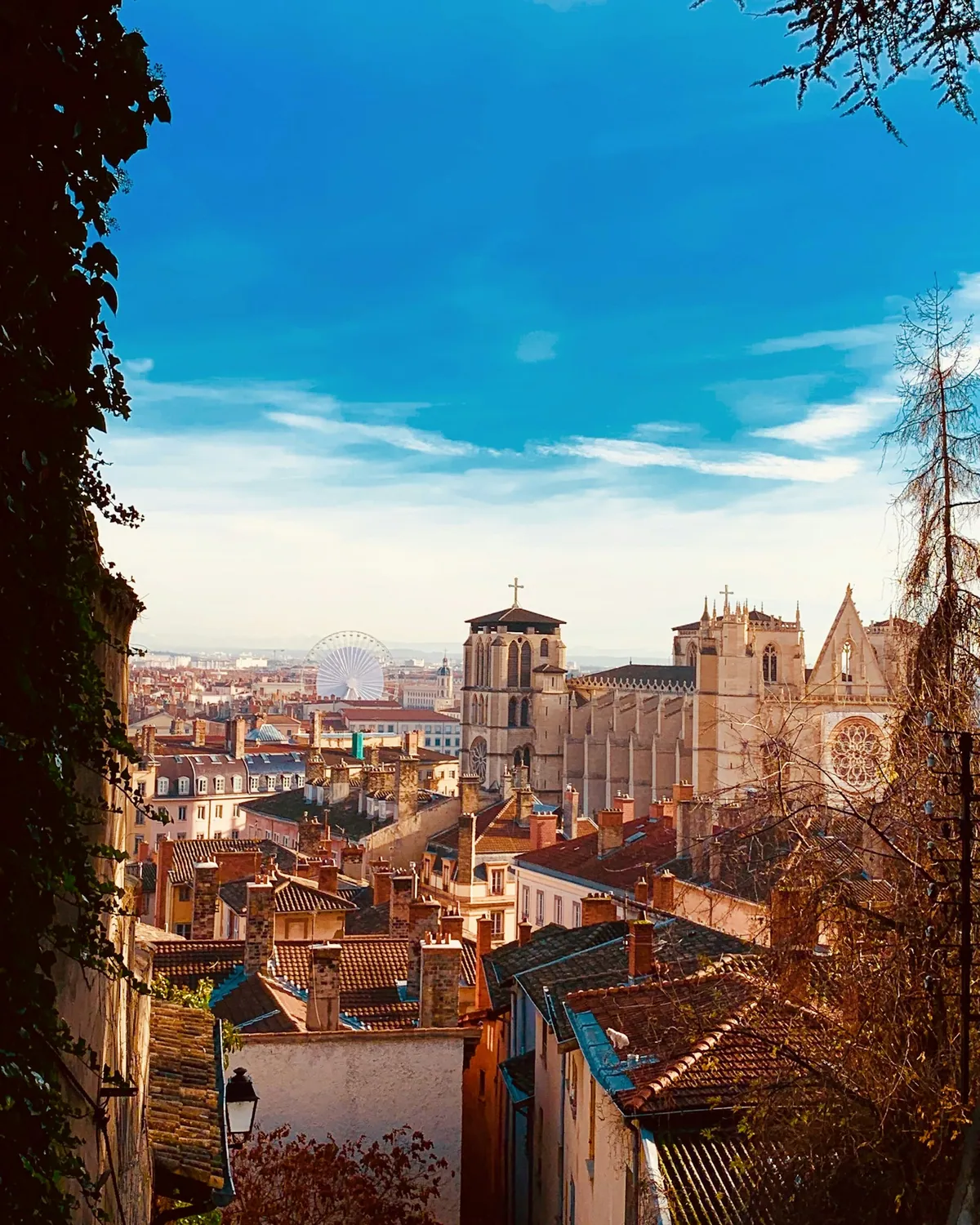
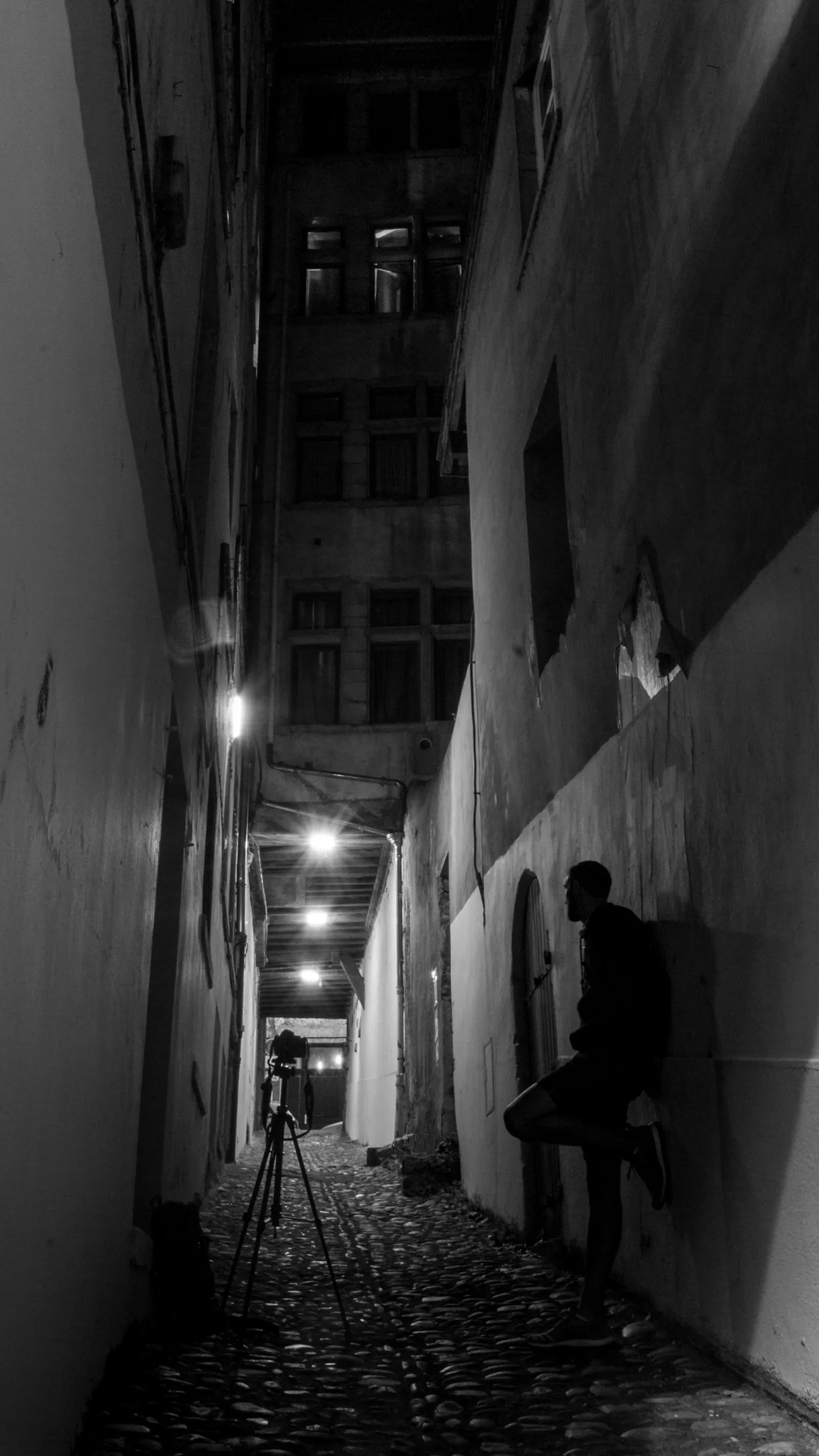
The peculiarity of Vieux Lyon — and the thing that defines its identity — is the system of traboules: covered passageways through the courtyards of buildings that connect parallel streets, originally built so that silk weavers could move bolts of cloth from workshop to merchant without taking them out into the rain. Many traboules are still open to the public during the day. They are unmarked from the street; you push open a discreet door and find yourself in a 16th-century stone courtyard with a spiral staircase climbing up four storeys. The Lyon Tourism office gives a map of the most accessible ones — Traboule de la Cour des Voraces, Long Traboule on Rue du Boeuf, and several others.
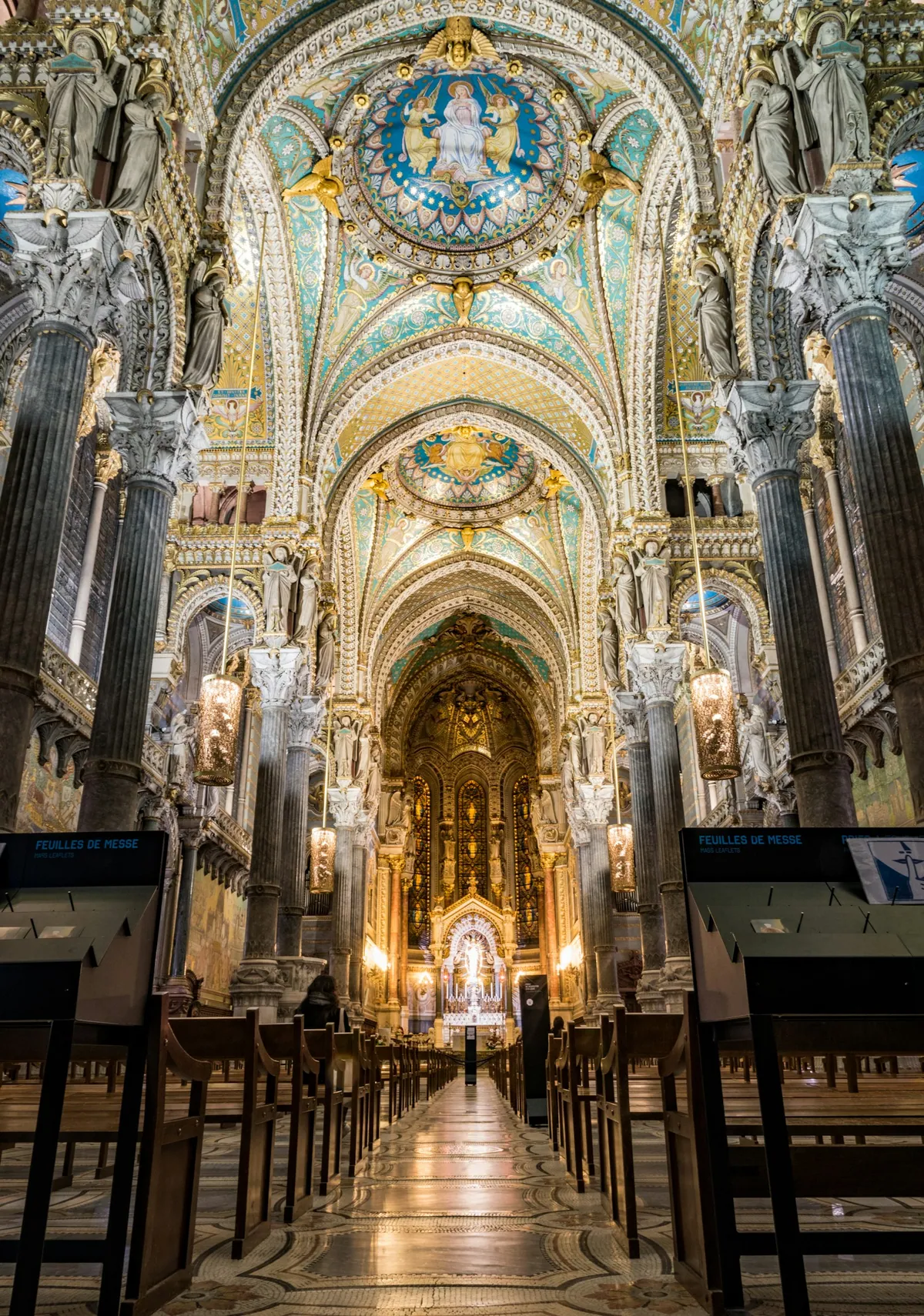
In the afternoon, take the funicular (Métro line F) up to the top of Fourvière hill. The Basilica of Notre-Dame de Fourvière at the top is a huge 19th-century neo-Byzantine confection, ornate inside, with views from the small esplanade outside that take in the entire city laid out below — the two rivers, the Presqu’île, and on a clear day the snow-capped Alps to the east.
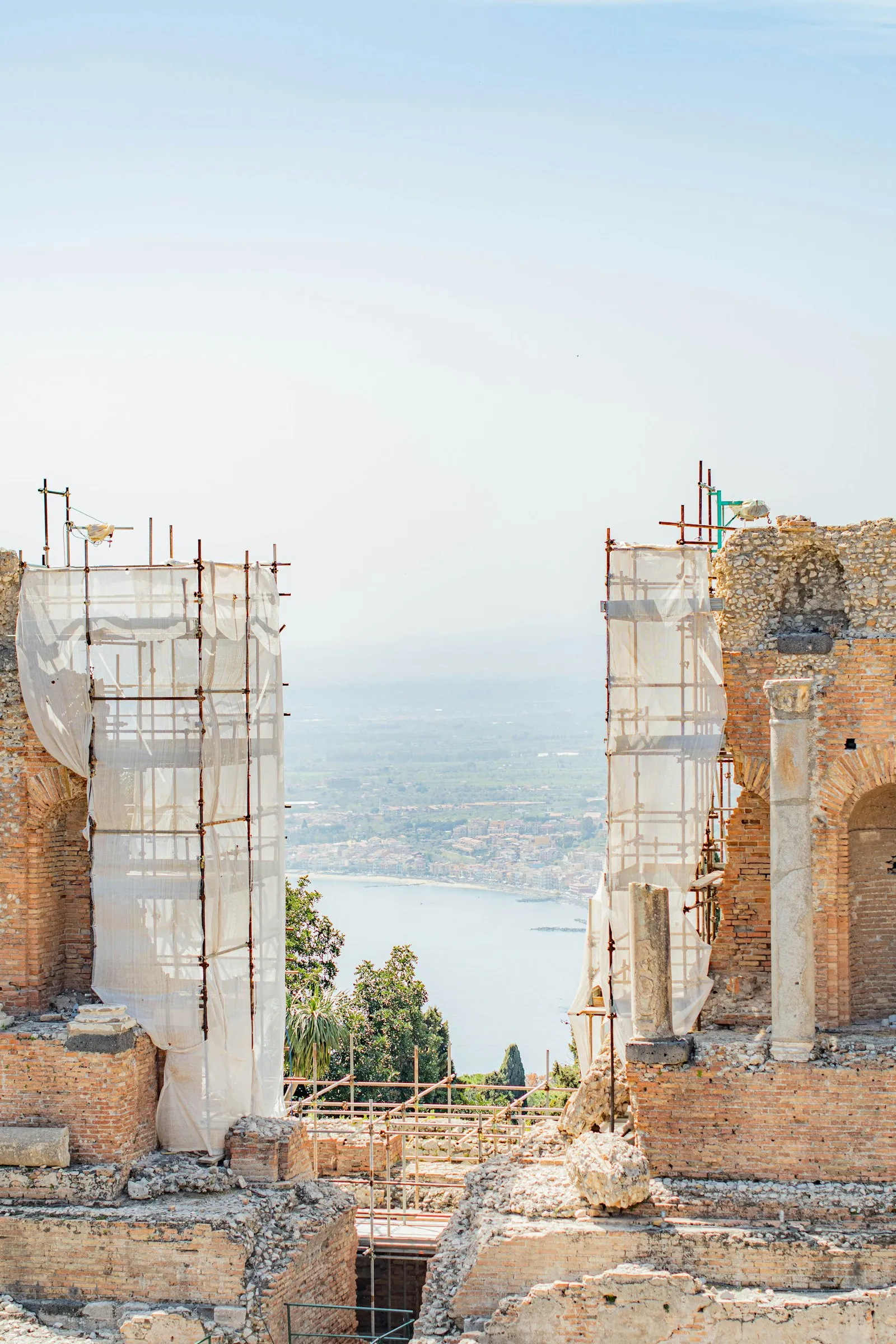
Just below the basilica are the ruins of the Roman city — the Théâtre Antique de Fourvière (a 10,000-seat Roman theatre, partially restored, still used for outdoor concerts) and the smaller Odeon next to it. The Lugdunum Roman museum on the same hillside has the artefacts. Allow two hours for the lot.
For dinner, your first bouchon. A bouchon is the classic Lyon eating-house — small, woody, family-run, serving the local food: salade lyonnaise (frisée with bacon and a poached egg), quenelle de brochet (a soft pike-flesh dumpling in a creamy sauce), andouillette (a strong tripe sausage, an acquired taste), tablier de sapeur (breaded tripe), and finishing with cervelle de canut (a fresh herb-and-shallot fromage blanc). Daniel et Denise, Le Garet, La Tête de Lard, and Le Bouchon des Filles are reliable. Book ahead.
Day two: the Presqu’île and the Croix-Rousse
The Presqu’île — Lyon’s central peninsula between the two rivers — is the 19th-century commercial and civic heart of the city. Walk Place Bellecour (one of the largest pedestrian squares in Europe), then up Rue Victor Hugo through the elegant 19th-century quarter, past Place des Jacobins, and on through the shopping streets to Place des Terreaux at the northern end with its Frank Gehry-disciple fountain and the Hôtel de Ville.
The Musée des Beaux-Arts on Place des Terreaux is one of the great regional fine-art museums in France — Renaissance Italian, French Romantic, Impressionist, modern — and it’s housed in a beautiful 17th-century former Benedictine abbey. Allow two and a half hours.
In the afternoon, climb to the Croix-Rousse — the old silk-weavers’ quarter on the northern hill of the city. The Croix-Rousse is steep (the famous “the hill that works” to Fourvière’s “the hill that prays”), full of small artisan shops, organic cafes, and a strong neighbourhood feeling. The Maison des Canuts here is a small museum dedicated to the silk-weaving tradition, with working Jacquard looms. Walk down the Pentes de la Croix-Rousse — the steep streets connecting the hill to the centre — for views of the city and a series of small bars and bistros that come alive in the early evening.
For dinner, choose between a second bouchon (different kitchen, similar menu) or one of Lyon’s contemporary restaurants. The Mère Brazier (3 Michelin stars, the spiritual home of Lyon haute cuisine) is the destination if you’ve booked months ahead. Le Café Sillon is a more accessible 1-star. Brasserie Georges (the giant beer hall by the train station, founded 1836) is the casual fun option.
Day three: the markets, Confluence, and a slow finish
Day three, start at the Halles de Lyon — Paul Bocuse, the famous covered food market on the eastern side of the river. Sixty stalls of charcuterie, cheese, fish, bread, pastry, and prepared food. Buy a chunk of Saint-Marcellin (the local cheese), a few slices of rosette de Lyon (the local cured sausage), a baguette, and a small portion of pâté en croûte. Eat it on a bench by the river. This is the local lunch.
In the afternoon, walk south through the Presqu’île to the Confluence — the redeveloped southern tip of the peninsula where the Rhône and the Saône meet. The Musée des Confluences here, in a striking deconstructivist building, is a sciences-and-society museum with extraordinary collections (mammoth skeletons, anatomy, ethnography). Worth two hours.
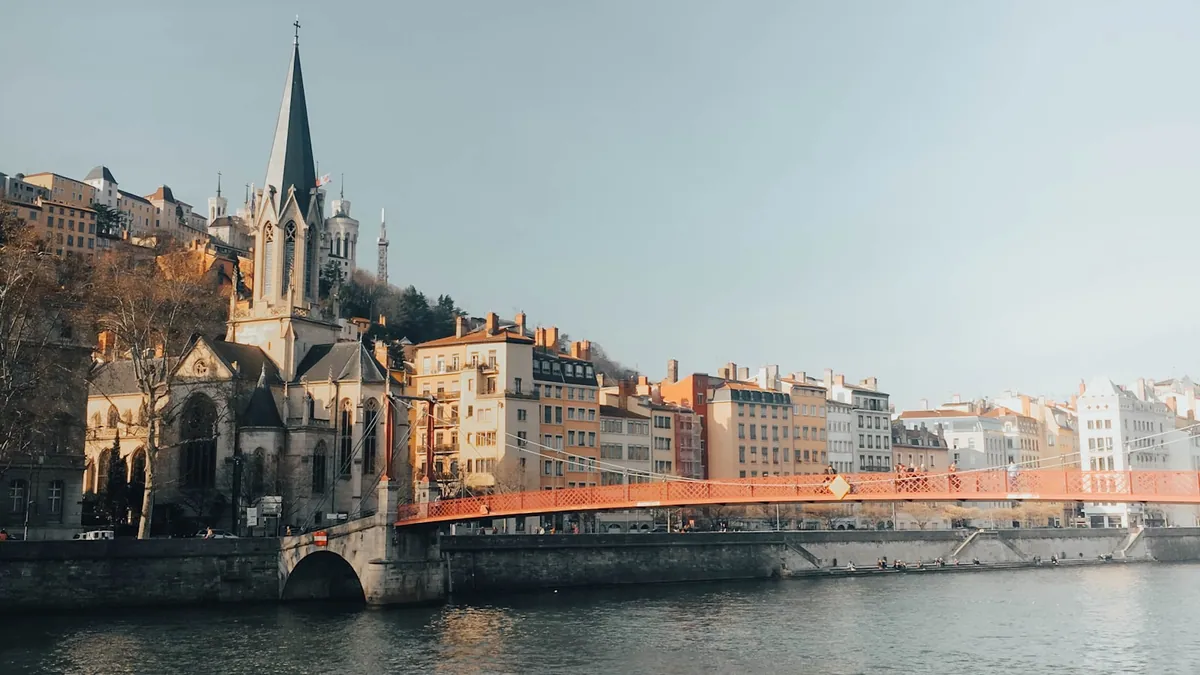
Walk back along the Saône for the sunset over Vieux Lyon and the basilica on the hill. Eat dinner at one of the small cafes on the river. Sleep well.
How nice are Lyonnais?
Properly nice — proud of their city in a quiet way that you only notice when they start listing the things you should do. Within three days I had: a bouchon owner sit at our table for fifteen minutes talking about her grandmother’s recipe for the salade lyonnaise we’d just eaten; a metro stranger walk us all the way to Fourvière funicular when we asked for directions; and a market vendor at the Halles slip an extra Saint-Marcellin into my bag because “the small ones are sweeter, you’ll like.” Lyon is a city that knows it’s good and is happy to share it.
If you go
• Eat at a real bouchon at least once. Look for the “Authentique Bouchon Lyonnais” certification on the door — it’s an actual quality mark, not marketing. • Don’t skip Fourvière — even if you’re not into churches, the view from the esplanade is the best in the city. • Use the metro and funicular for the hills. The walking is steep. • Visit the Halles de Lyon on day one if possible, so you have the rest of the trip to come back if you find favourite stalls. • Allow time for the bistros and bouchons. Lyon dinners are not quick.
Lyon is the city the French save for a long weekend with their best friends. Three days here is enough to understand why. The food is real. The Renaissance streets are real. The two-hill panorama from Fourvière at sunset is the photograph. Plan it.