The French Riviera: Nice, Èze, Villefranche and the Côte d’Azur
Five days on the south-east coast — the Promenade des Anglais, the medieval cliff village, and the bay where the millionaires moor their boats.
📍 Nice, France
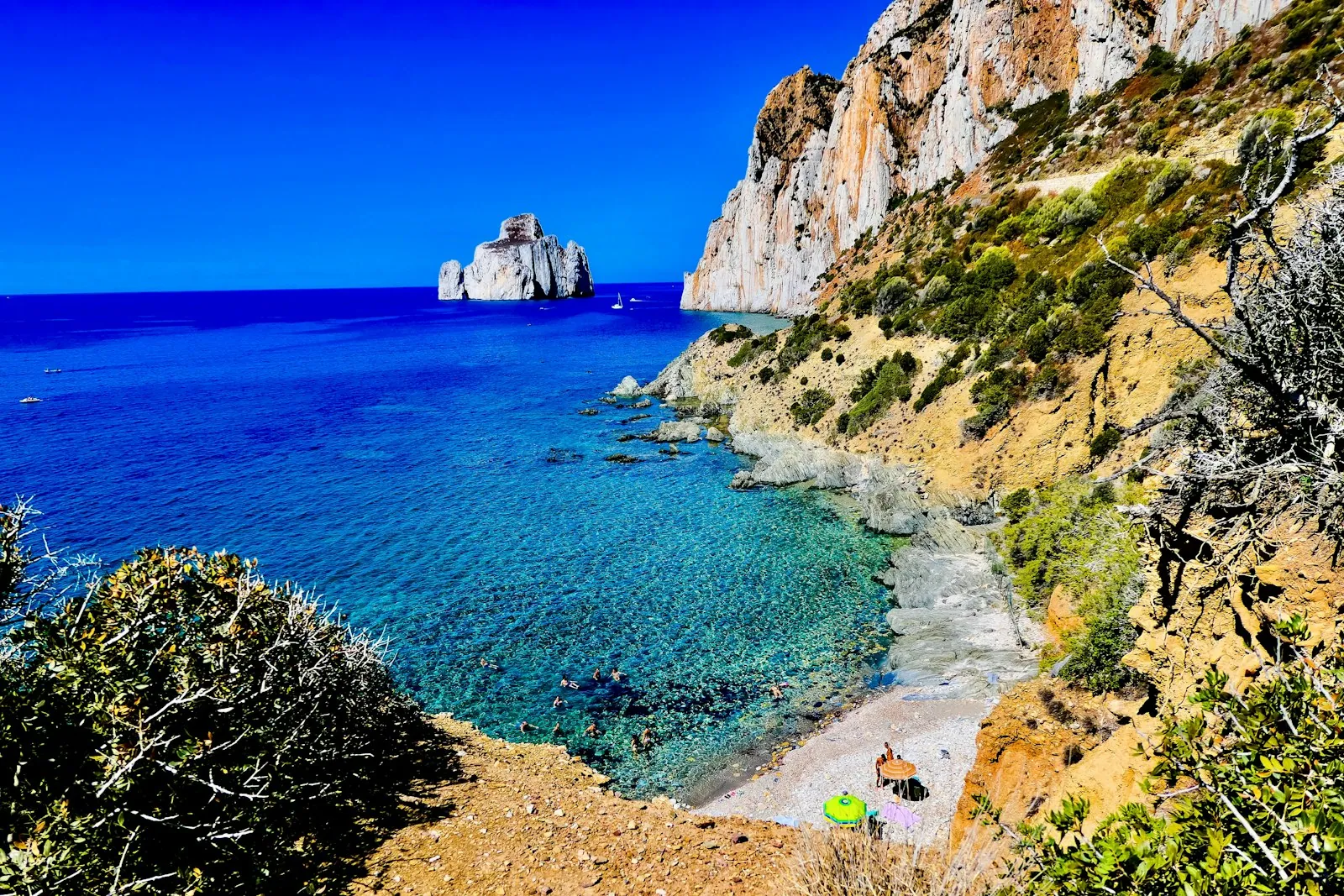
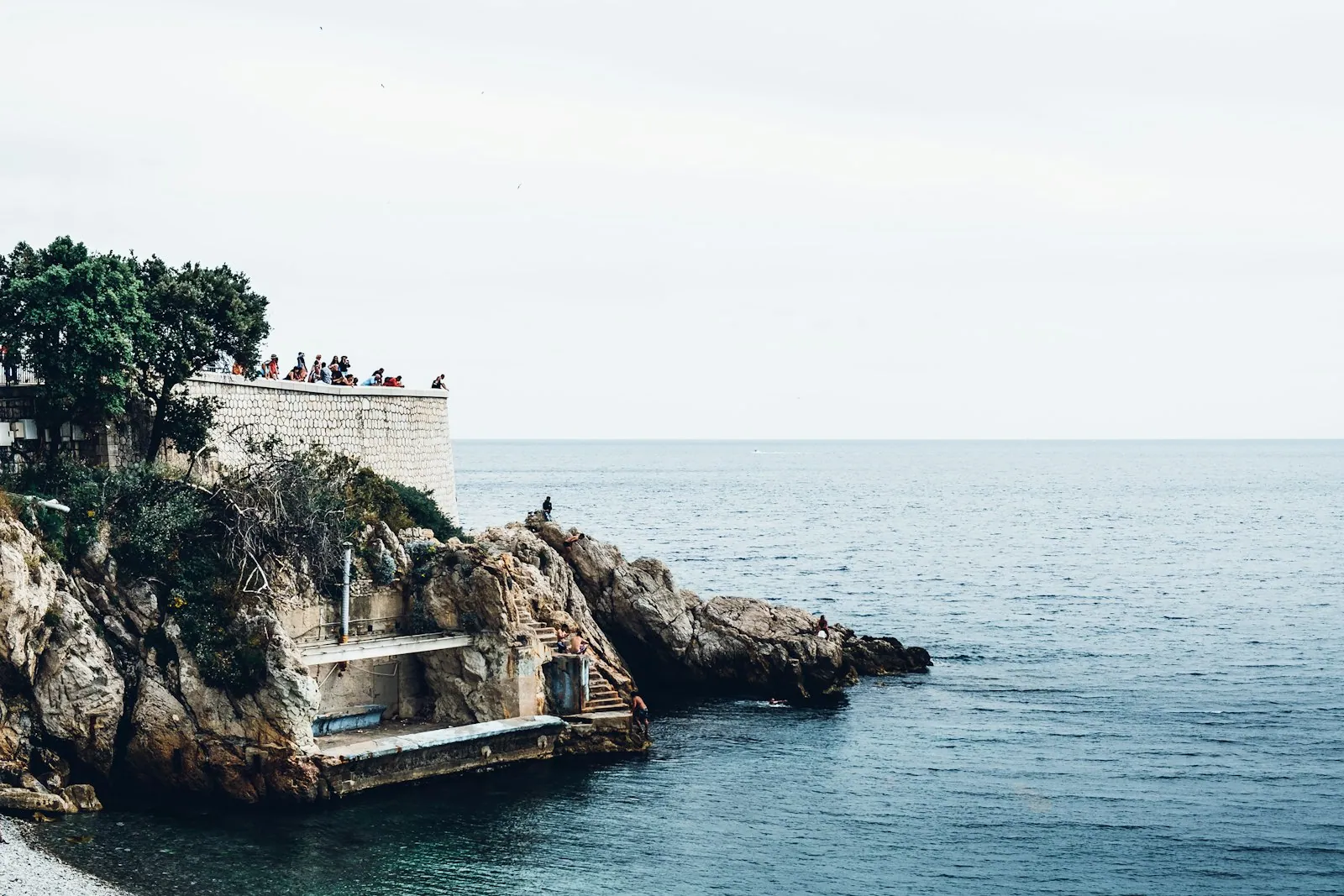
The French Riviera is the strip of Mediterranean coast running east from roughly Marseille to the Italian border — although when most people say “Riviera” they mean the central section, the Côte d’Azur, from Cannes through Antibes, Nice, Villefranche and Monaco. The water is the colour you’ve seen in photographs (ridiculously, on a still afternoon, it really is that bright a turquoise), the cliffs are limestone, the villages perched on them are pale pink and ochre, and the boats parked in the bays look as if they belong to people who don’t check prices. Some of them do, in fact, belong to people who don’t check prices. Most of the rest is somehow more affordable than its reputation suggests, especially if you base yourself in Nice.
Five days is the right length for a Riviera first trip. Nice as your base, train and bus everywhere else.
The setup
Fly into Nice Côte d’Azur airport — direct flights from most European capitals and a handful of long-haul connections. The airport is fifteen minutes by tram or taxi from central Nice. You don’t need a car — the train along the coast (TER) and the local buses cover the entire stretch from Cannes to Monaco at low cost.
Stay in central Nice, ideally a short walk from the Promenade des Anglais and the Old Town. Mid-range hotels run €120–200 a night in summer; cheaper in May and October.
Day one: the Promenade and the Old Town
Settle in. Walk the Promenade des Anglais — the long, broad, palm-lined seafront that gives Nice its postcard. The promenade is five kilometres of polished tarmac with benches every fifty metres, a bike lane, and the wide Bay of Angels on one side with its famous round-pebble beach. Find a bench, sit, watch the joggers and the rollerbladers and the older couples doing their evening walk. The light at sunset turns the whole bay pink-orange.
After dark, walk into the Old Town (Vieux Nice) — the warren of narrow streets behind the seafront, full of restaurants, bars, gelaterias, and the famous flower market at Cours Saleya during the day. Have dinner at one of the small tables in a side street. Order socca (a thin chickpea-flour pancake, the local snack), pissaladière (the onion-and-anchovy tart), and pistou (the local soup). All three are Niçoise specialities and all three are five euros on most menus.
Day two: Èze
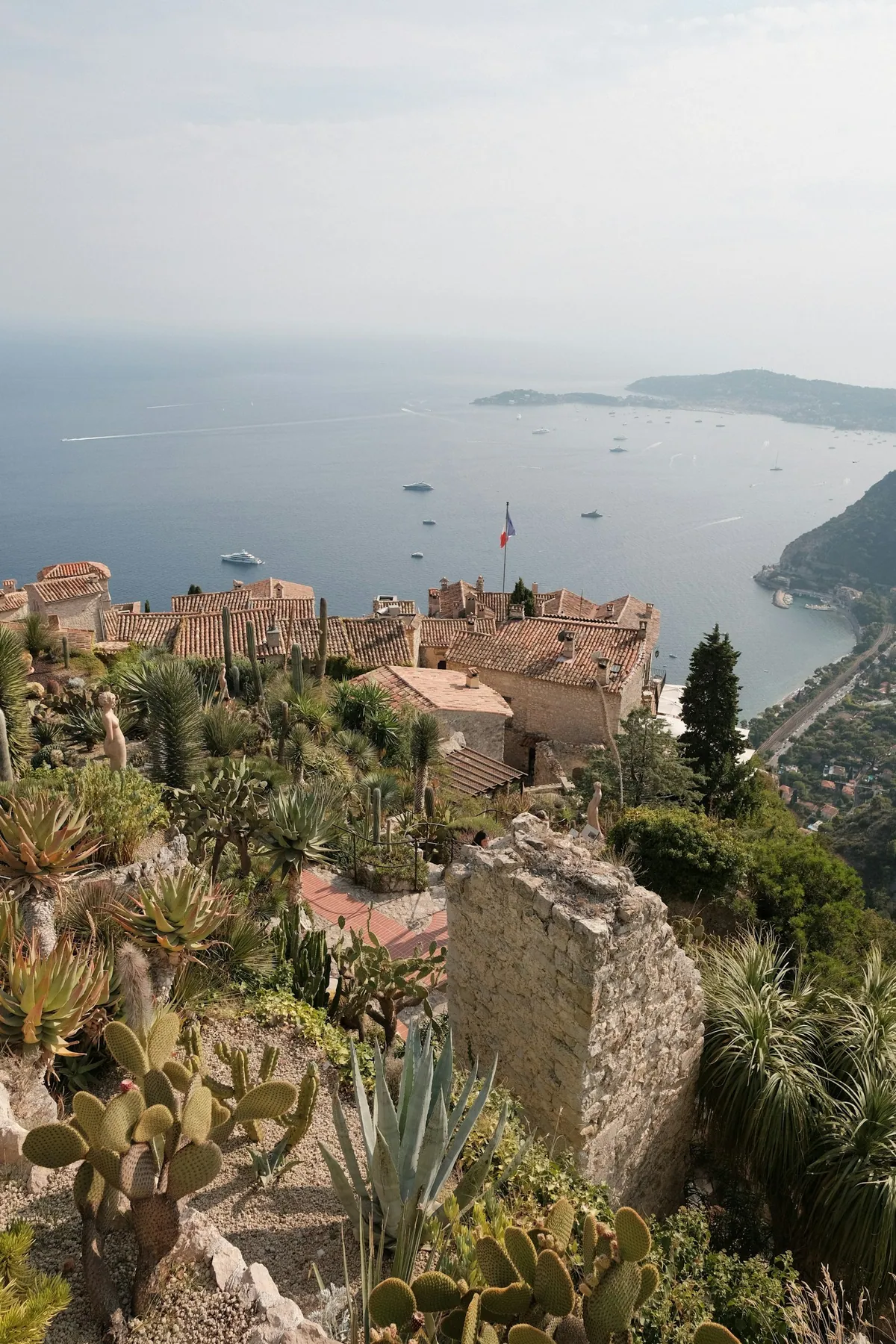
Take the bus (no. 82 from Nice train station, about forty minutes) up to Èze — a perfect medieval cliff village perched 400 metres above the sea on a peninsula east of Nice. Èze is small. The whole village is maybe 200 metres across. You walk up through cobblestone alleys, past tiny boutiques and ateliers, to the Jardin Exotique at the top — a clifftop botanic garden full of cacti and succulents, with the most extraordinary views down to the Mediterranean and across to Cap Ferrat.
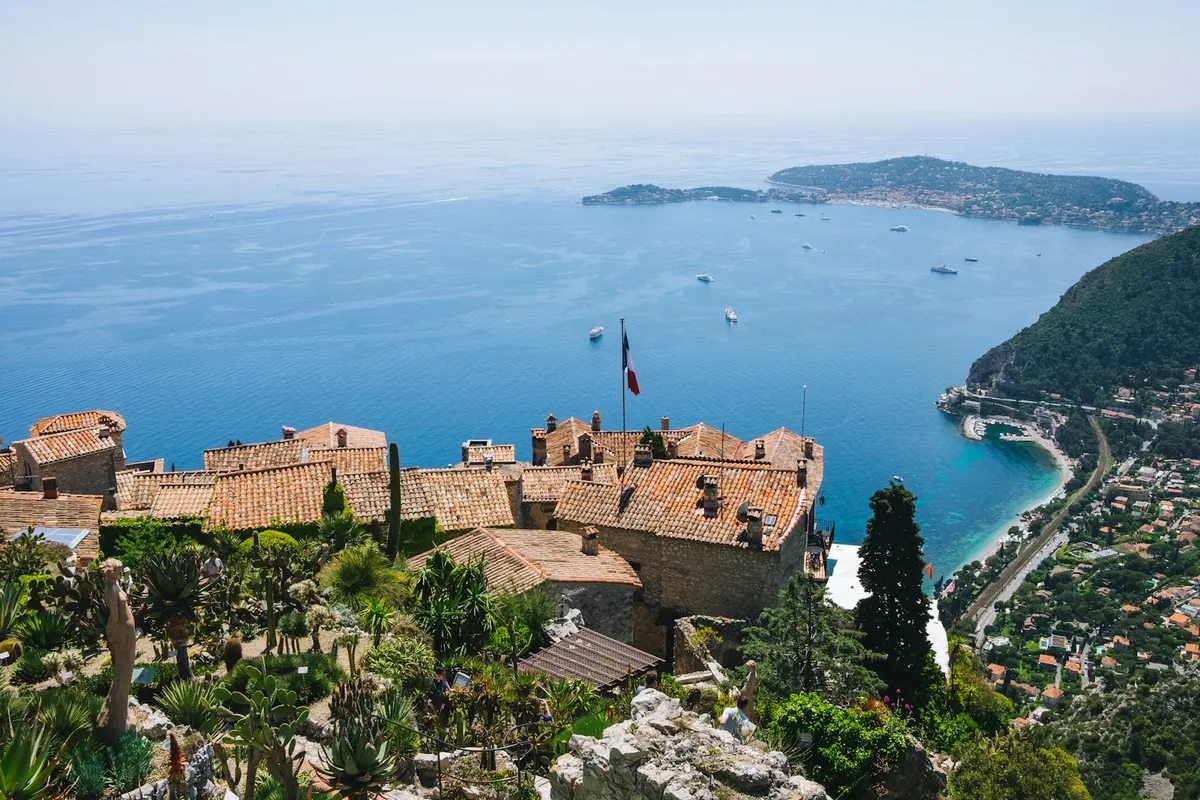
Spend a slow morning in Èze. Have lunch at one of the restaurants in the village (book ahead — there are only a handful and they fill at noon). The Château Eza, the cliffside hotel-restaurant, has the famous terrace view; the smaller bistros on the way up the hill are a third of the price and almost as good.
In the afternoon, walk the Nietzsche Path — the steep stone footpath that drops from Èze village down to Èze-sur-Mer (the small seaside town at the foot of the cliff). The walk is about 45 minutes downhill, named for the philosopher who claimed to have composed parts of Thus Spoke Zarathustra while walking it. The view down to the sea as you descend is one of the iconic Côte d’Azur images. Train back to Nice from Èze-sur-Mer.
Day three: Villefranche-sur-Mer
The next day, train ten minutes east from Nice to Villefranche-sur-Mer — a small bay village that was once the natural harbour of Nice and is now arguably the prettiest single bay on the Riviera. The water in the bay is the deepest turquoise you can find on the coast. Yachts moor here in summer. Cruise ships sometimes anchor offshore and tender passengers in. The village itself, a tight cluster of pastel buildings climbing the hill from the harbour, is small, walkable, and full of small restaurants, a 16th-century citadel and a tiny chapel decorated by Jean Cocteau.
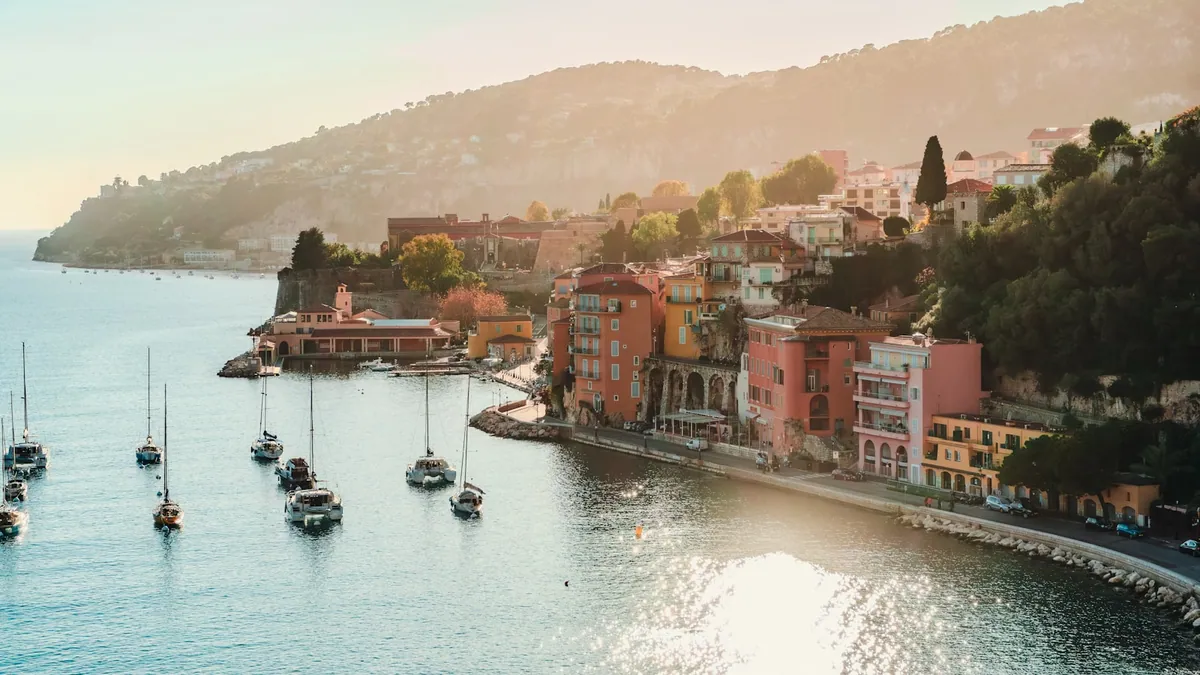
Spend the day. Swim from the small beach at the south end of the bay (sand, not pebbles, and warm even in early June). Have lunch on the harbour at La Mère Germaine or any of the smaller bistros. Walk the small streets above the harbour. There is no rush.
If you have energy in the late afternoon, walk around the headland to Cap Ferrat — a short coastal path takes you past the Villa Ephrussi de Rothschild (a beautiful pink villa with formal gardens, open to visitors) and along a clifftop walk to the small fishing village of Saint-Jean-Cap-Ferrat. The cap is millionaire-villa land. The clifftop walk is free.
Day four: a day trip — Monaco or Antibes
Day four, pick a direction. East to Monaco: the principality, twenty minutes by train from Nice, packed with absurd casinos and a harbour full of yachts that can charitably be described as “houses with hulls.” The Old Town (Monaco-Ville) is up on the rock at the western end and is genuinely lovely — narrow streets, the prince’s palace, a small cathedral. The 11:55 a.m. changing of the guard at the palace is a 15-minute ceremony and is the kind of thing you do once.
West to Antibes: a fortified port town between Nice and Cannes with a beautiful old quarter, a long sandy beach, and the Picasso Museum (housed in the Château Grimaldi where Picasso worked in 1946). Antibes is more relaxed and more lived-in than Monaco. Pick the one that suits your mood.
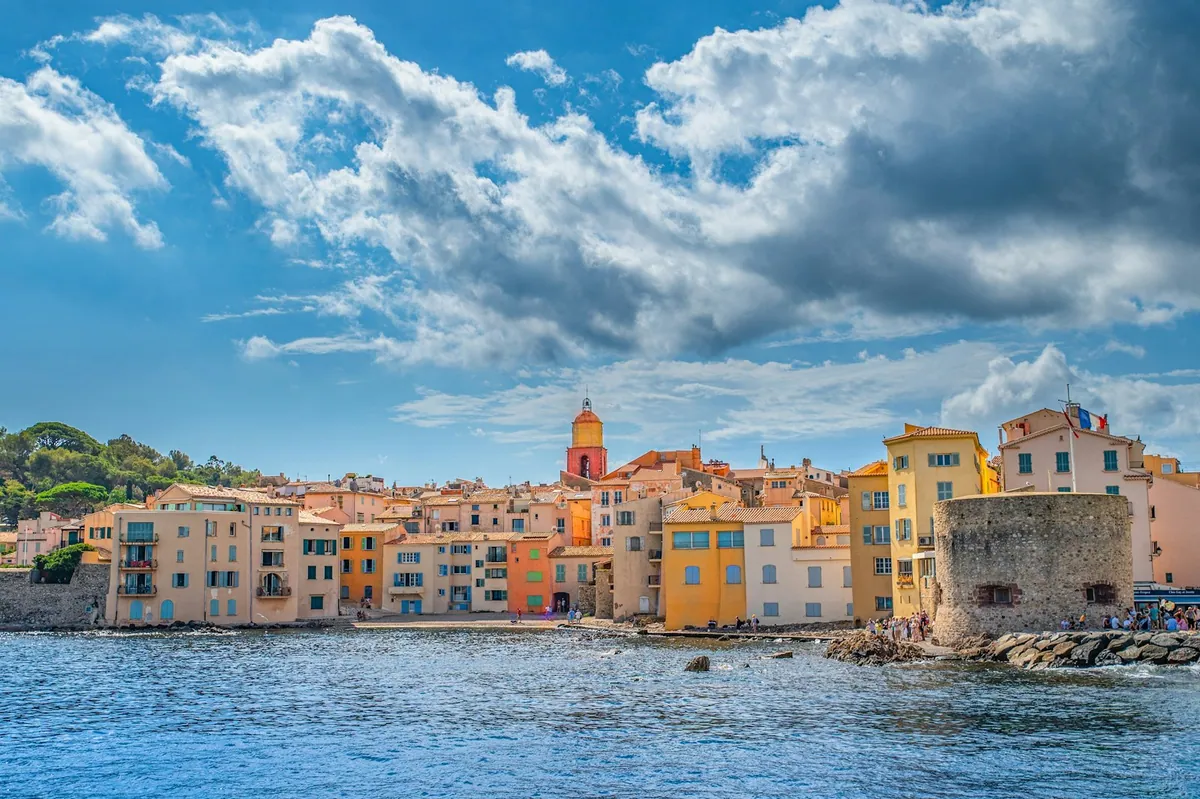
If you have an extra day or week, take the slow train all the way west to Saint-Tropez — the famous yacht-and-art-gallery village, smaller than its reputation, with a beautiful harbour and a market square that has been there for centuries.
Day five: the slow last day
Last day is for slowness. Sleep in. Brunch at one of the cafes on Place du Palais de Justice in Nice. Walk the flower market at Cours Saleya. Climb the Castle Hill (Colline du Château) at the eastern end of the bay for the postcard view back across the Old Town and the Promenade. There’s a small park, a waterfall (yes, in the middle of a city), and a viewpoint. End at the Promenade with a final coffee.
How nice are Niçois?
Riviera-warm. Nice is a port city with a long tradition of welcoming visitors, and the locals are easier to engage than in Paris. My five days included: a market vendor at the Cours Saleya throw in a free bag of dried herbs because I’d bought a kilo of olives; a bus driver wait at the Èze stop while I ran back for a bag I’d left at a cafe; and a sommelier at a Vieux Nice wine bar spend twenty minutes guiding me through a tasting flight she’d arranged on the spot for the price of two glasses. The friendliness is real, in the slightly Mediterranean way: warm, slightly loud, and not in a hurry.
If you go
• Stay in Nice. The trains and buses make every other Riviera town a day trip from there. • Don’t bring a car. Parking in Nice is hellish; the trains are excellent. • Eat the niçoise specialities — socca, pissaladière, salade niçoise, pissaladière. Cheap and excellent. • Swim. The water is genuinely warm from June to October and the beaches at Villefranche, Plage de Beaulieu and Plage Mala are all easy. • Allow time for the small villages — Èze, Villefranche, Cap Ferrat, Antibes — not just for Nice and Monaco.
The Côte d’Azur is the bit of France that the rest of the world has known about for longer than any of us. The light is real. The water is real. The villages are real. Five days here is enough to start, and not enough to ever quite be done with.