Champagne: Reims, the Cathedral and a Day Underground in the Cellars
Two days in Champagne — the coronation cathedral of the French kings, the underground chalk caves where the bubbles age, and the vineyard hills around Épernay.
📍 Reims, France
Champagne is the small region in north-east France where, by long tradition and now by strict legal protection, the only sparkling wine in the world that is allowed to be called champagne is made. The region is small — about 100 kilometres long and 30 wide — and it has two main towns: Reims at the northern end (the historic coronation city of the French kings) and Épernay 25 kilometres south (the company town, where most of the great champagne houses have their headquarters). The vineyards roll across the hills between the two and out into the surrounding countryside. Beneath both towns are tens of kilometres of underground chalk cellars, originally cut in Roman times, where the champagne bottles age in cool quiet for years before they’re shipped.
You can do a champagne weekend in two days from Paris (45 minutes by TGV to Reims). It’s one of the best long-weekend trips in France.
The setup
TGV from Paris (Gare de l’Est) to Reims. Stay in central Reims for both nights, or split between Reims and Épernay if you want a quieter second night. You don’t need a car if you’re basing in Reims — the cellars are walkable from the centre, and Épernay is 30 minutes by regional train. For the vineyard drives, hire a car for a day or join a small-group tour.
Day one: Reims, the cathedral, two cellars
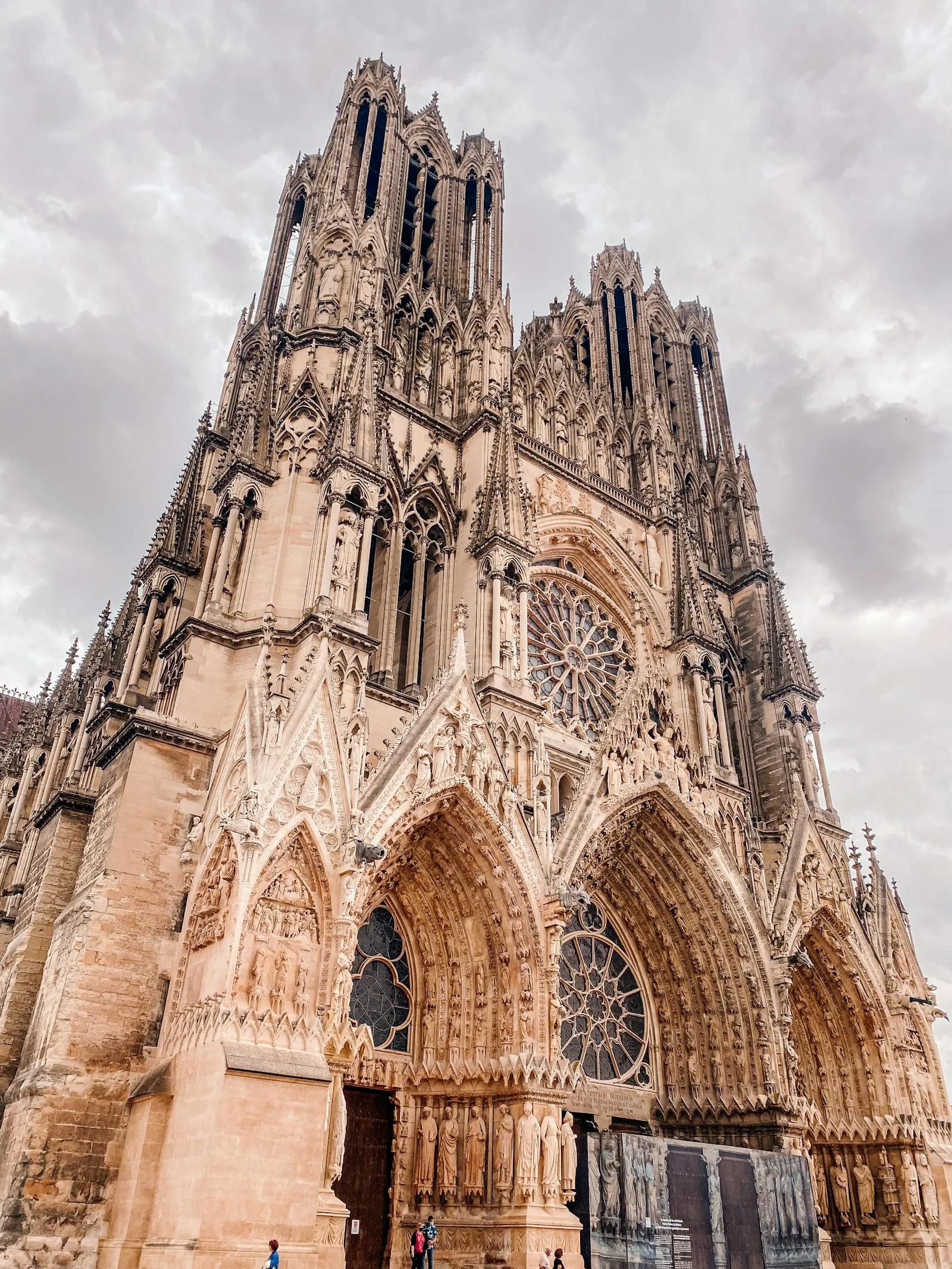
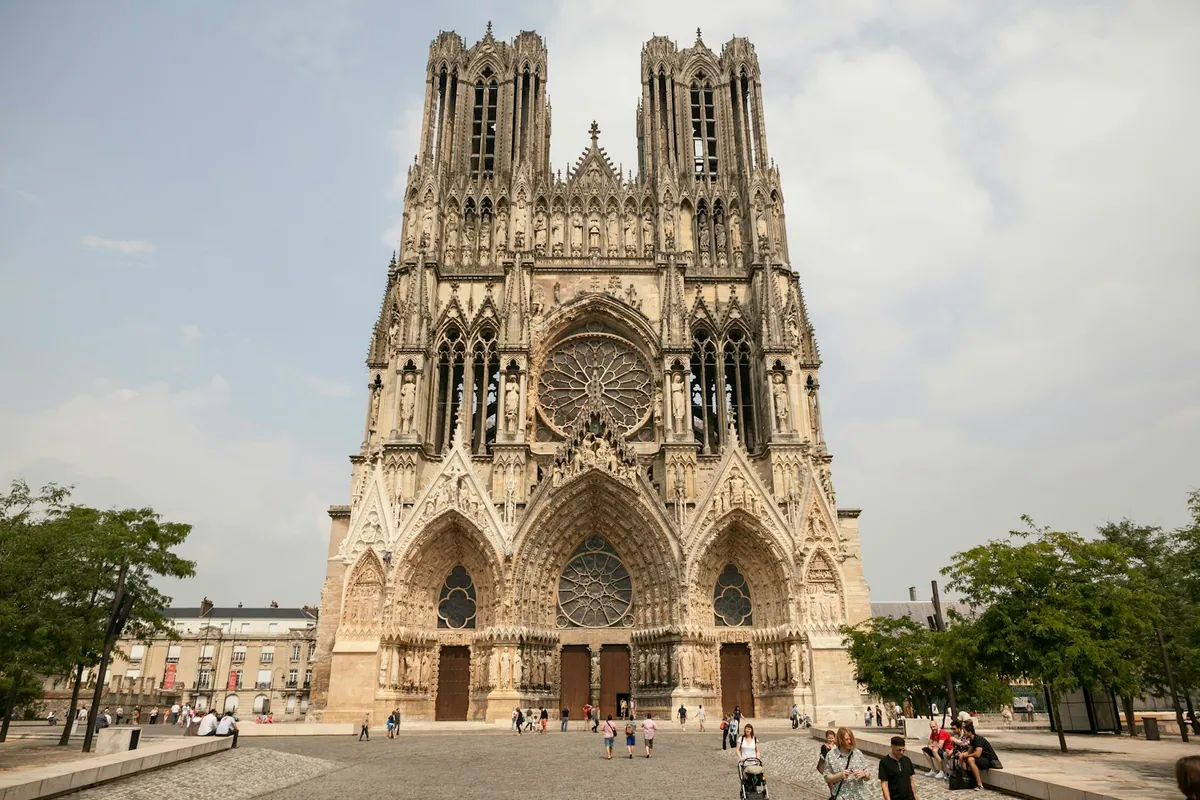
Reims is a small city — population about 180,000 — but its history is enormous. From the 12th century until 1825, French kings were crowned in Reims Cathedral. The current cathedral, the third on the site, was built starting in 1211 and finished in the 1270s, and it is one of the great High Gothic buildings in the world.
Walk to the cathedral first. The west front is a forest of statuary — the famous Smiling Angel (l’Ange au Sourire) above the north portal is the photograph everyone takes. Inside, the soaring stone vaults and the stained glass (some original 13th-century work, some 1960s Marc Chagall, some 1970s Imi Knoebel) make for one of the great church interiors in Europe. The nave is vast. The light in the late afternoon, slanting through the western rose window, paints colour across the floor.
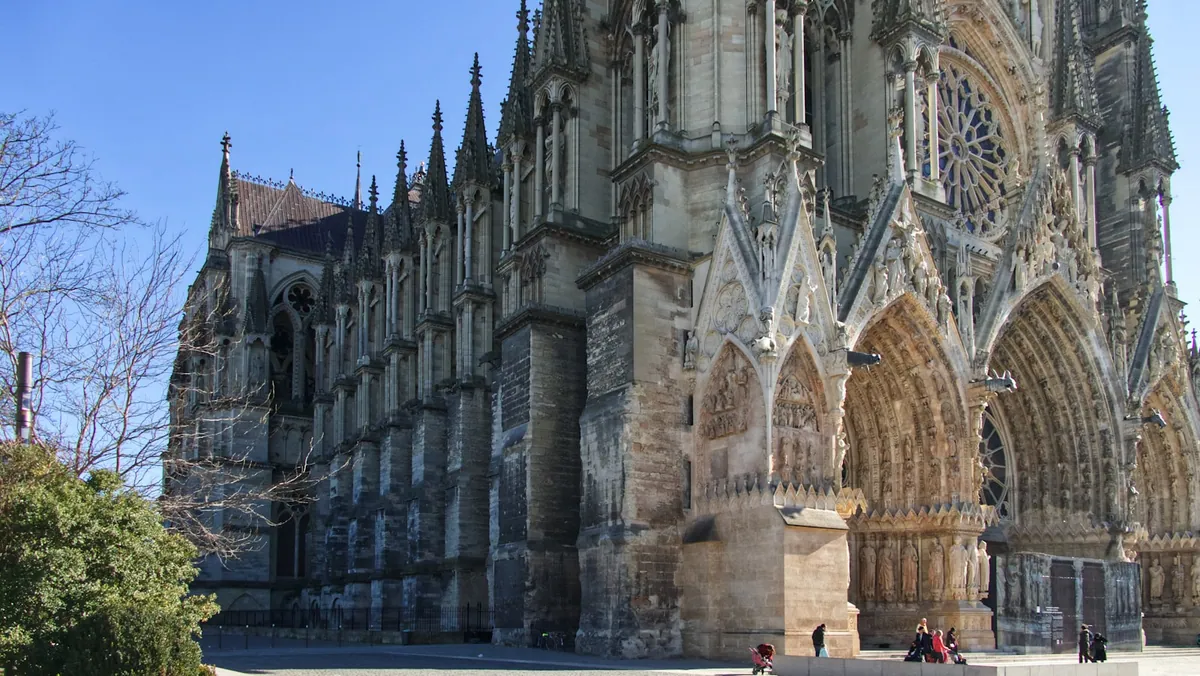
Allow ninety minutes. Don’t skip the Palace of Tau next door — the former archbishop’s palace, now a museum that holds the cathedral’s treasury and the original 13th-century statues that have been replaced on the facade with replicas. The room of Charles VII’s coronation (1429, with Joan of Arc in attendance) is a quiet, weighty space.
Lunch at one of the brasseries on Place Drouet d’Erlon — Reims’ pedestrianised main square. Then book yourself onto two champagne cellar tours, one in the early afternoon and one in the late afternoon. The major houses with cellars in Reims are Taittinger (Saint-Nicaise, on the southern edge of the centre, in former Roman chalk caves), Pommery (next door to Taittinger, with a famous monumental staircase), Veuve Clicquot (on the same hill), Ruinart (the oldest champagne house, founded 1729), Mumm, and Lanson. Each runs cellar tours throughout the day; book online a week ahead. Cost: €25–60 per person depending on the house and the included tasting.
I did Taittinger and Pommery. Both have some of the most spectacular cellars — Taittinger’s Roman chalk caves are extraordinary (cool, dim, dripping with chalk dust, vast vaulted spaces of bottles aging in racks), and Pommery’s 18 kilometres of cellars include a series of huge sculpted reliefs carved directly into the chalk walls in the 19th century. The tasting that ends each tour is the cherry on top: in Taittinger’s case, a glass of their Brut Réserve and one of their Prélude Grand Cru; in Pommery’s, a flight of three.
End the day with dinner at one of Reims’ excellent restaurants — Le Foch (one Michelin star, classical), Brasserie Le Jardin (more relaxed, beautifully done), or any of the smaller bistros on the side streets near the cathedral.
Day two: the vineyard drive to Épernay
Drive (or take the regional train) south to Épernay. The drive is the experience: you go through the village of Aÿ-Champagne (one of the most prestigious grand-cru villages, where Bollinger and Ayala are made) and along the Côte des Blancs — the chalk hill where the chardonnay grapes for blanc de blancs champagnes are grown.
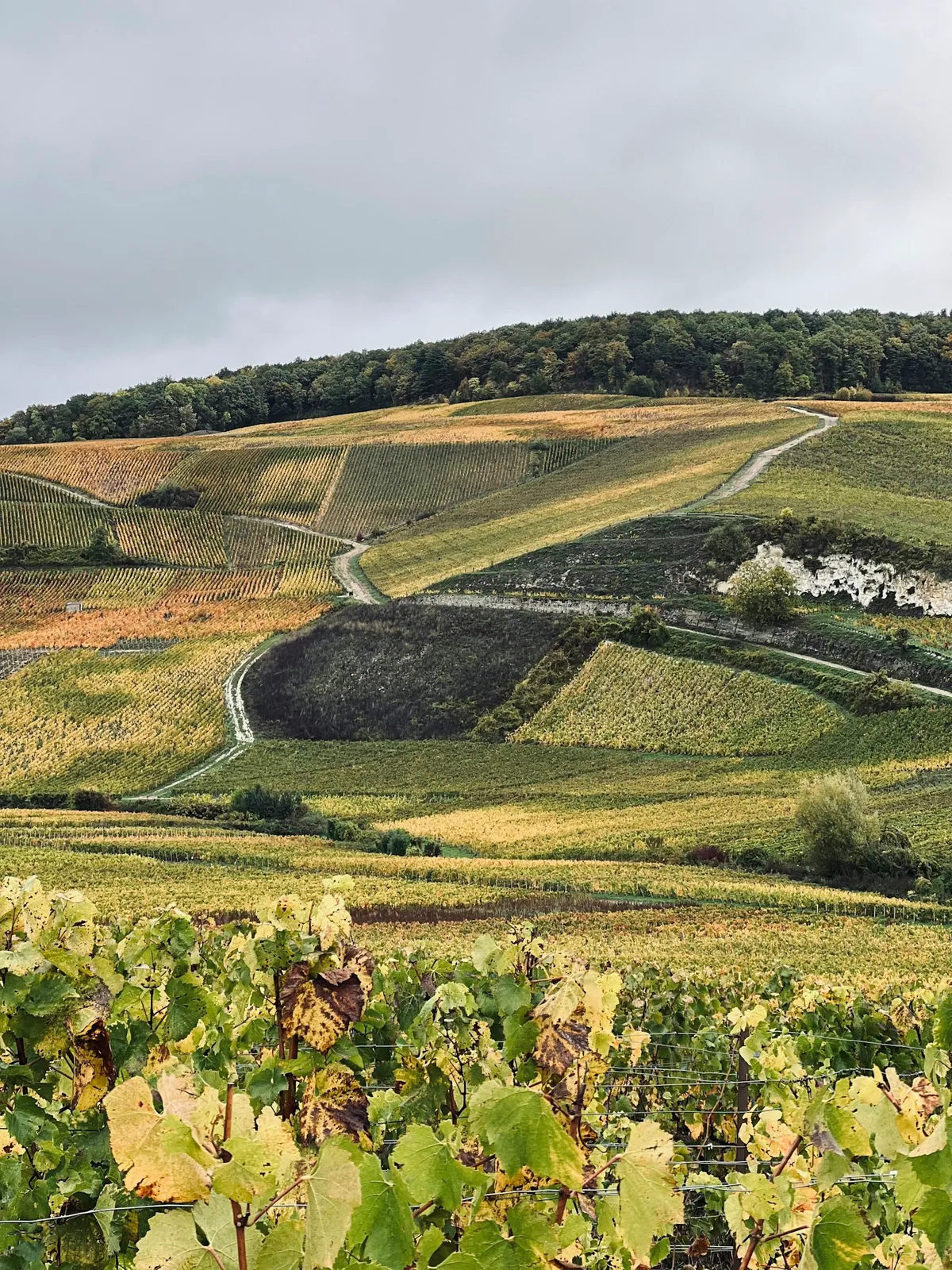
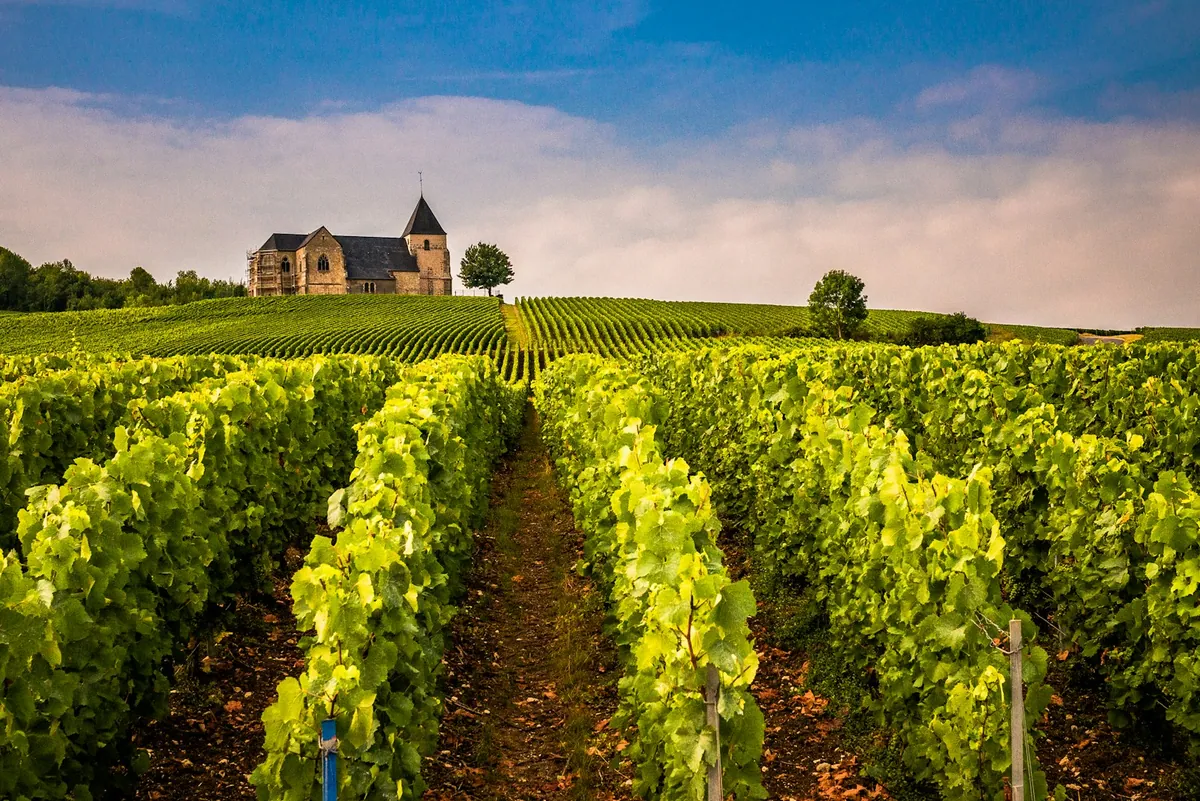
Stop at the village of Hautvillers, signposted off the road. This is where Dom Pérignon (the 17th-century Benedictine monk) was the cellarer at the abbey, and where (according to legend, possibly inaccurate) he discovered the méthode champenoise. The abbey is gone (destroyed in the Revolution), but the abbey church is still there, and Dom Pérignon’s tomb is in the nave. The village itself is small, beautifully kept, with views across the vineyards. Buy a half-bottle of grower champagne from one of the tiny producers at their cellar door.
Continue to Épernay. The Avenue de Champagne is the famous street — a 1-kilometre tree-lined boulevard along which the great houses have their headquarters: Moët & Chandon, Mercier, Pol Roger, Perrier-Jouët. There are cellar tours here too, and they’re slightly more refined and slightly more expensive than the Reims ones. Moët & Chandon is the most famous. Mercier’s cellar tour rides through the cellars on a small electric train.
Have a long lunch at one of the Épernay restaurants. La Cave à Champagne and La Grillade Gourmande are reliable; Royal Champagne (a Michelin-starred restaurant in a hotel up on the hill above town) is the destination version.
In the afternoon, drive the small vineyard roads north of Épernay through Cramant, Avize, and Le Mesnil-sur-Oger — the heart of the Côte des Blancs and home to several extraordinary grower-producers. Stop at one or two cellar doors. Buy a case if you can.
Train back to Paris in the evening, or stay another night in Reims and travel back the next morning.
How nice are people in Champagne?
Properly nice. The champagne region runs on hospitality — the cellar tour staff, the brasserie waiters, the cellar door pourers at the small grower-producers — and the warmth is consistent and unforced. Within two days I had: a cellar door owner in Hautvillers refuse to charge me for a tasting because “you are very interested, that is enough”; a brasserie waiter in Reims correct my pronunciation of the menu item and then quietly bring me an extra small glass of the wine he thought paired better; and a Pommery cellar guide stay an extra fifteen minutes after the tour to answer questions from our small group. The friendliness is real. The cellars are real. The champagne, at the source, is exceptional.
If you go
• Book TGVs and cellar tours in advance, especially for weekends. • Pace yourself with the tastings. Two cellars in a day is the right number; three is too many. • Try the small grower-producers, not just the big houses. The “grower champagne” movement (Récoltant-Manipulant, look for the “RM” code on the label) is producing some of the most exciting champagnes today. • Bring an empty bag for bottles. You will be tempted; you will succumb. • Visit the cathedral in the late afternoon for the best light through the western rose window.
Champagne is one of those weekends that feels both indulgent and serious — the wine is real, the history is real, the chalk under your feet has been there since the dinosaurs. Two days from Paris, and you come back with two cases of wine and the vague intention to take a longer trip next time.