Bilbao in Three Days: The Guggenheim, the Casco Viejo and the Basque Hills
Three days in the city that reinvented itself around a single building — and turned out to have a great old town and food culture too.
📍 Bilbao, Spain
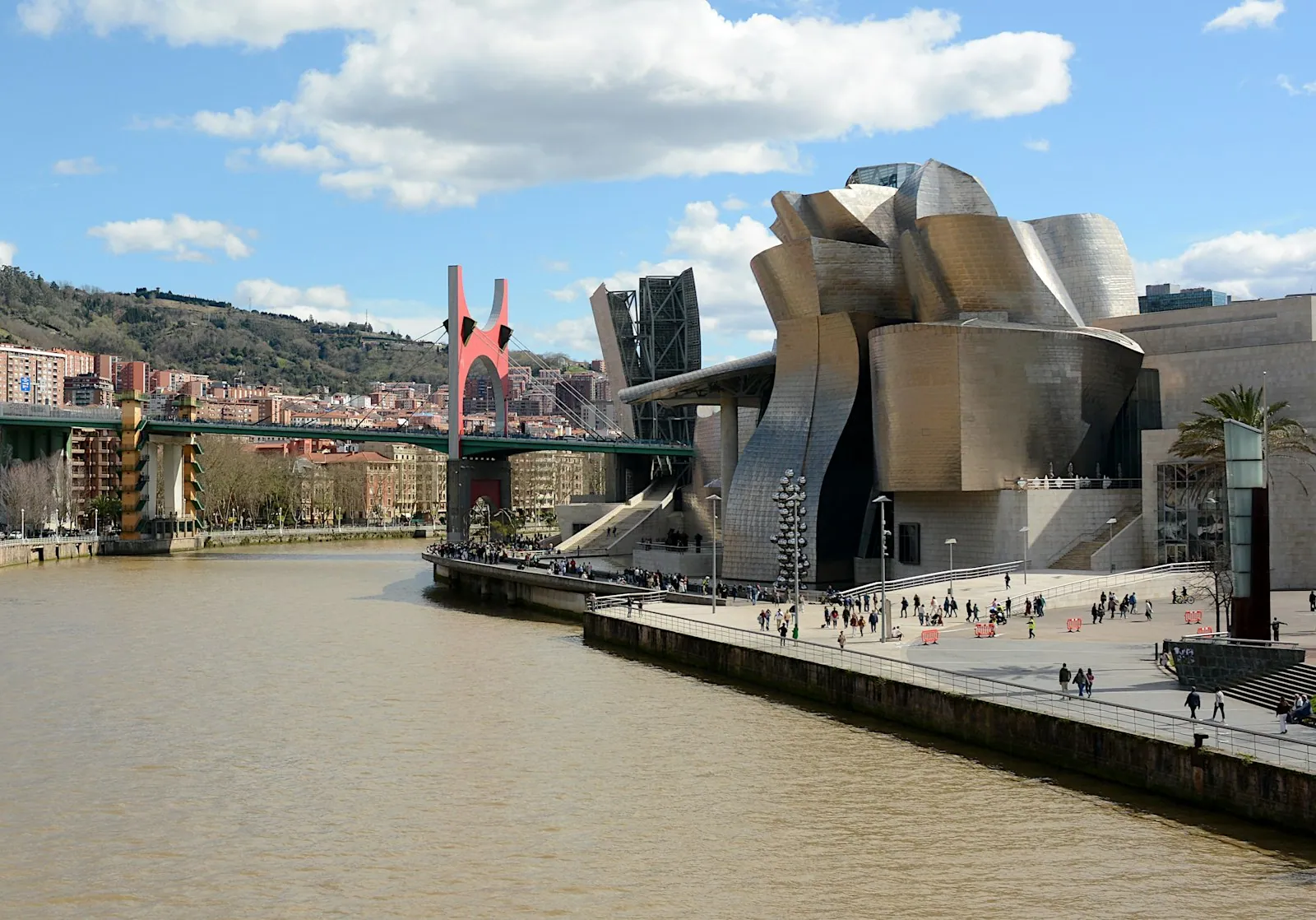
Bilbao is the largest city in the Basque country, sitting on a winding estuary in the green hills of north-east Spain, and one of the most studied urban-regeneration stories in modern Europe. For most of the 20th century it was a heavy-industrial steel and shipbuilding city — gritty, polluted, and economically declining as those industries collapsed in the 1980s. Then, in 1997, a single building changed the trajectory of the entire city: the Guggenheim Bilbao, designed by Frank Gehry, a 24,000-square-metre titanium-clad museum that turned a dying riverfront into an international art destination essentially overnight. The “Bilbao effect” has been studied and copied around the world. Less famously, the city around the museum has also quietly become one of the most rewarding small cities in Spain — a beautifully preserved medieval Old Town, a serious Basque-cuisine pintxos and restaurant scene, and the green hills and coastline of the Basque country starting just outside the urban edge.
Three days is enough to do Bilbao properly.
The setup
Fly into Bilbao (10 minutes from the centre by bus). Stay near the Casco Viejo (the medieval old town) or in the Abando / Indautxu district just across the river. Mid-range hotels run €100–200 a night.
The city is walkable end-to-end in 30 minutes. The metro and tram cover the further reaches. The Funicular de Artxanda is the only mountain access you need.
Day one: the Guggenheim
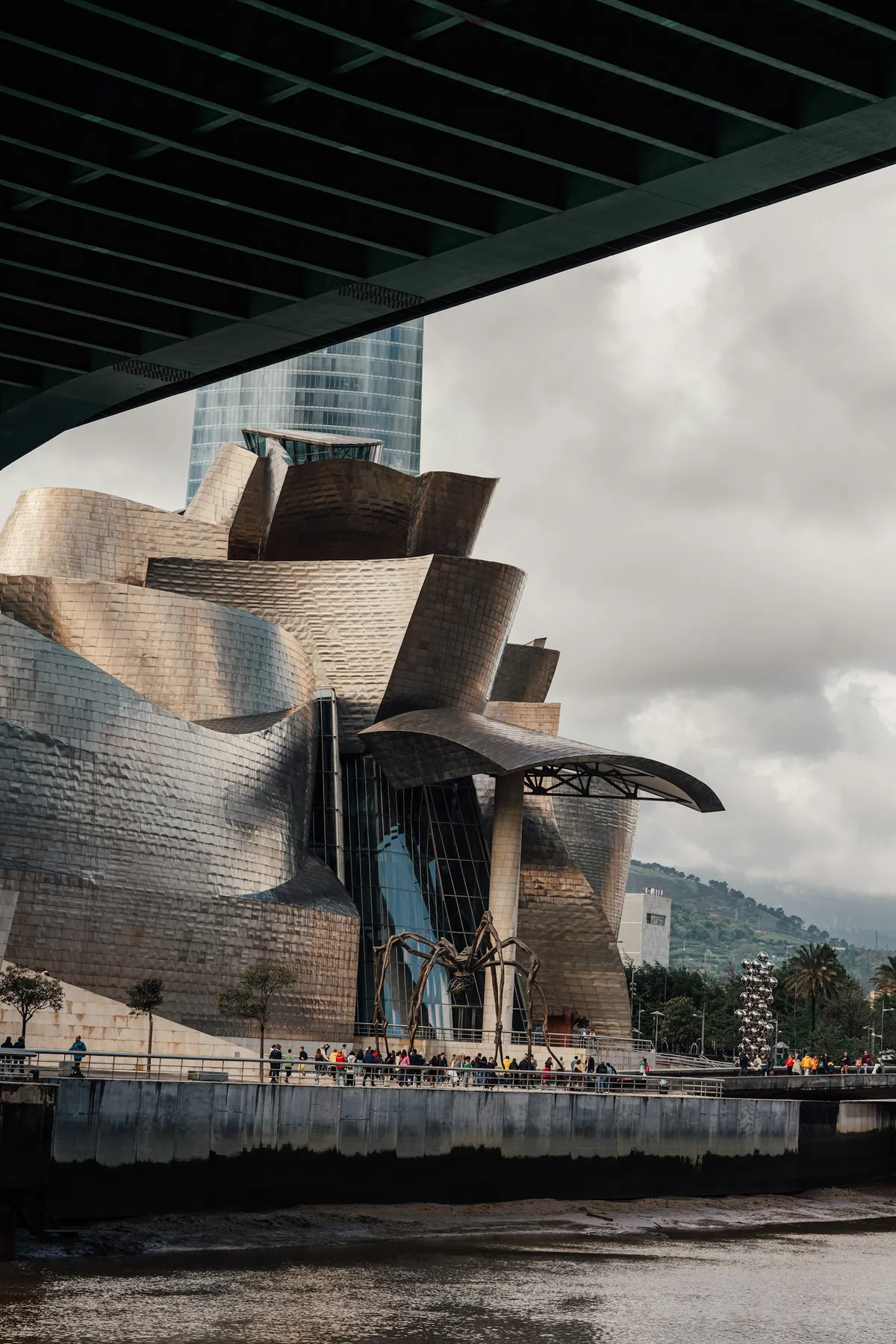
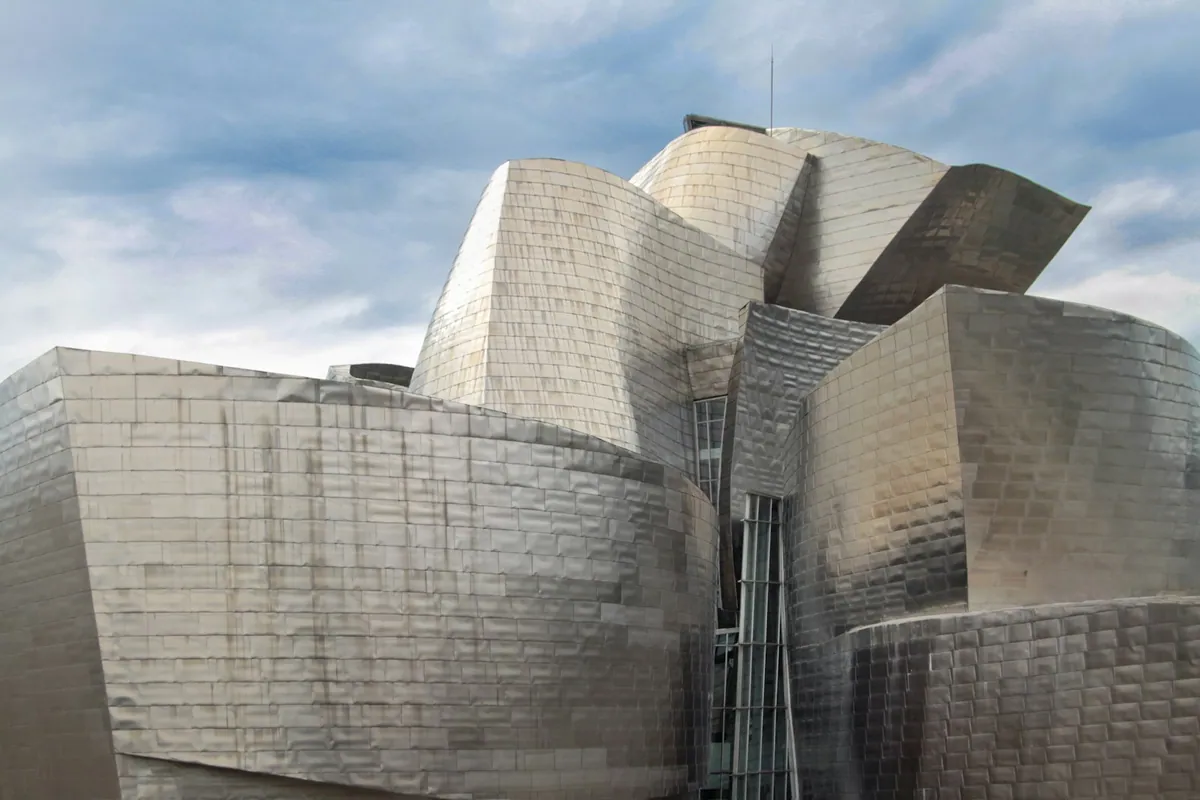
The Guggenheim is the headline experience. Even people who don’t care about contemporary art come away from the building amazed — the swirling, organic, titanium-and-stone forms have weathered into a slightly silvered glow that is even more striking than when the museum opened in 1997. The exterior alone takes an hour to walk around: from the river side, you see the famous “flower” of titanium curves; from the Avenida de Abandoibarra side, you see Jeff Koons’ Puppy (a 12-metre topiary terrier covered in flowers) standing guard at the entrance; from the bridge, you see the Maman spider (Louise Bourgeois, a 9-metre bronze that lives at the rear of the museum).
The interior is equally extraordinary. The atrium is a 50-metre-tall cathedral-like space of white walls and curving ceilings, full of natural light. The galleries spiral around it. The permanent collection is small (this is a satellite Guggenheim, with the main collection in New York) but features several headline pieces — Richard Serra’s vast steel sculptures fill an entire 130-metre gallery on the ground floor. The rotating exhibitions are the bigger draw and tend to be excellent.
Allow three hours. Buy a ticket online (about €18). The museum is closed on Mondays in low season.
For lunch, eat at the Bistro Guggenheim (the museum’s downstairs restaurant, more accessible) or at one of the riverside cafes nearby. Or walk into the Casco Viejo for a pintxos lunch — Bilbao’s pintxos scene is excellent.
In the afternoon, walk the Nervión river. The riverbank has been transformed in the last 25 years from a working industrial waterfront into a long landscaped promenade with art, modern bridges (the Zubizuri footbridge, designed by Calatrava, is a striking white arch across the river), and views back to the museum.
Day two: Casco Viejo and the markets
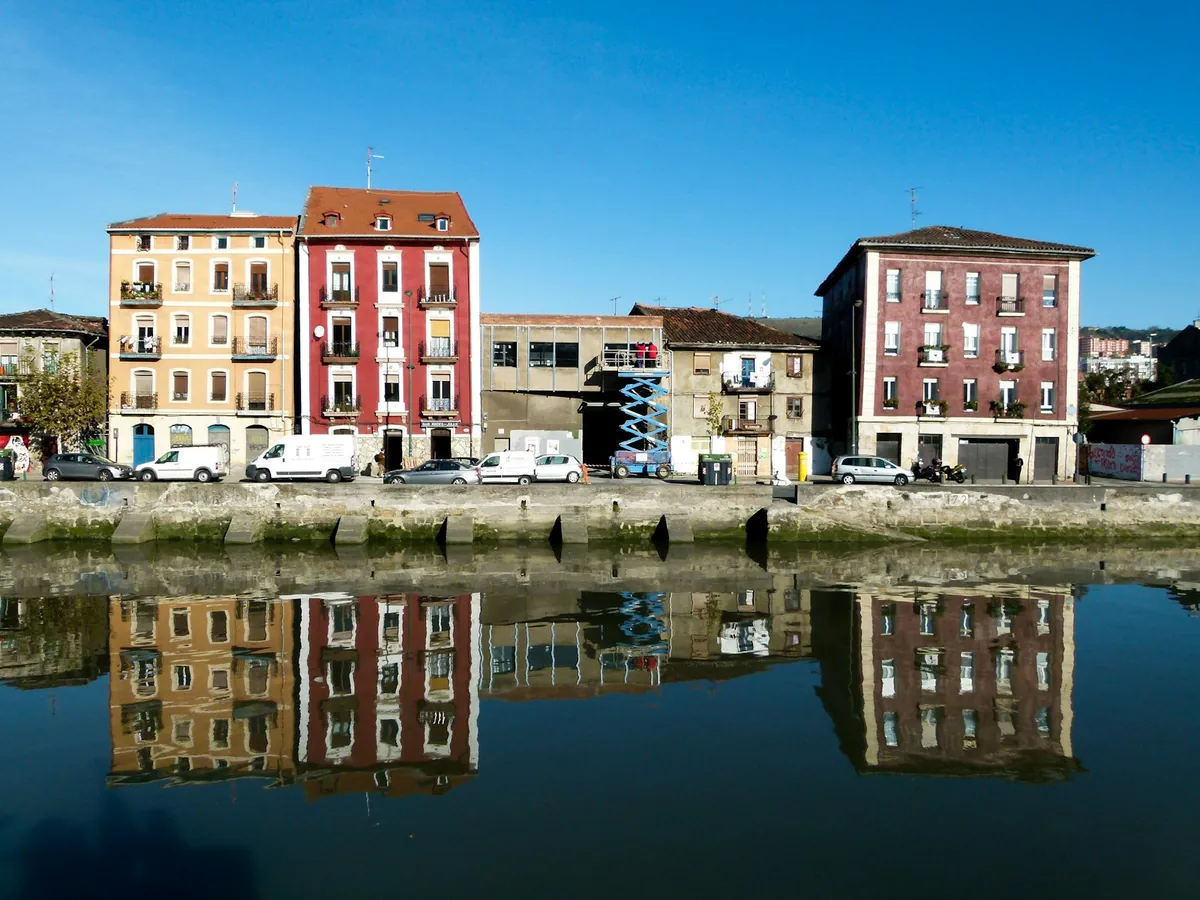
Bilbao’s Casco Viejo (the Old Town) is a tight grid of seven streets — the Siete Calles — on the right bank of the Nervión, between the cathedral and the Plaza Nueva. The whole district is small enough to walk in 20 minutes, but it’s packed with pintxos bars, independent shops, the cathedral, the Mercado de la Ribera, and the kind of small medieval squares that the rest of Spain saves up for tourist postcards.
Walk first to Plaza Nueva — a beautifully proportioned 19th-century arcaded square that is the social heart of the Casco Viejo. The arcades are full of pintxos bars; the central space is full of older locals watching the world go by. Sunday morning has a small stamp and coin market here.
The Cathedral of Santiago, on the southern side of the Casco Viejo, is a beautiful Gothic building with a 14th-century cloister. The Basílica de Begoña on the hill above (reached by a short funicular ride) is the spiritual heart of the Basque country, with views over the city.
The Mercado de la Ribera, on the riverbank, is one of the largest covered markets in Europe — a beautiful 1929 art-deco-style building full of fish stalls, cheese stalls, fruit and vegetable counters, and several excellent food bars where you can eat oysters, cured ham, or grilled fish for lunch standing up.
For dinner, do a pintxos crawl in the Casco Viejo bars. Reliable: Gure Toki (the famous foie pintxo, plus excellent seasonal specials), Sorginzulo (the wine selection is the highlight), Berton (the menu changes daily, ambitious cooking), Bar Charly (the older, more traditional choice). Order a glass of Txakoli or a Cosecha (the local Rioja-area red), eat one or two pintxos, move on. The Bilbao pintxos crawl is slightly more relaxed than San Sebastián’s — fewer bars per square kilometre, slightly slower pace.
Day three: a day in the Basque country
Day three is a day trip into the surrounding region. Three good options:
The coast at Getxo and Punta Galea, 20 minutes by metro. Getxo is the seaside extension of Bilbao — beaches, a long clifftop walk, the famous Vizcaya Bridge (a UNESCO-listed 1893 transporter bridge that still operates, ferrying cars and pedestrians across the river mouth). A half-day.
The wine country of Rioja Alavesa, 1 hour south by car. The Basque-administered northern part of the great Rioja wine region, with several spectacular contemporary wineries (Marqués de Riscal’s Frank-Gehry-designed hotel and bodega, Ysios’s undulating Calatrava-designed winery, Baigorri’s vertiginous gravity-fed building). Tastings, lunch in the medieval village of Laguardia. A full day.
The coast at San Juan de Gaztelugatxe, 45 minutes by car or bus. The famous (now even more famous since being filmed as Dragonstone in Game of Thrones) is a tiny rocky islet connected to the mainland by a 241-step stone causeway, with a small chapel at the top. Half-day visit; book online a few days ahead — entry is now timed.
I did the Rioja Alavesa day. Three winery visits, a long lunch in Laguardia, the slow drive back along the dramatic Cantabrian mountain road. Best decision of the trip.
End the trip with one more pintxos crawl in Bilbao. Sleep early. Catch the morning flight.
How nice are Bilbainos?
Basque-warm. Bilbao has the same Basque cultural identity as San Sebastián, the same Euskara language signage, the same slight reserve on first contact, the same warm welcome by day two. My three days included: a Guggenheim guard quietly point me to the rotating exhibition I’d almost missed; a Mercado de la Ribera vendor add an extra few oysters to my plate “because the small ones are sweeter”; and a hotel concierge book me a Rioja day trip with five hours’ notice when I changed my mind about the schedule. Bilbao is a city that has reinvented itself, and the locals are quietly proud of it.
If you go
• Visit the Guggenheim on day one. It’s the experience the city is built around. • Don’t skip the Casco Viejo. It’s the soul of pre-Guggenheim Bilbao. • Try the txikiteo — the local term for a pintxos crawl. Three or four bars in an evening. • Eat the local seafood. Bilbao’s fish is some of the best in Spain. • Allow a day for the Basque country surroundings. Rioja Alavesa, Getxo, or Gaztelugatxe — all worth it.
Bilbao is the bit of Spain that quietly reinvented itself. Three days here will give you the Guggenheim, the medieval Casco Viejo, and a day in the surrounding Basque country. You leave with a serious affection for a city that is no longer the secret it was a decade ago.